Featuring Gaby Moreno Cory Beers Cimbalom Band November 30, 2023 Getty Center, Los Angeles California, USA
Gaby Moreno & Van Dyke Parks
By PAUL ZOLLO
Just when it seemed all hope was lost, this happens.
It was a beautifully heartfelt musical celebration featuring two of Los Angeles’ greatest attributes: the beloved maestro of multitudes, Van Dyke Parks (not a native, but a longtime Angeleno who moved here from his Hattiesburg home in 1961 and has had a profound impact on our town) – and The Getty Center, a glorious and sprawling mountaintop temple to the arts above our city.
It’s been hard for those of us who live above ground in America to remain hopeful during this time of disinformation and dissonance, especially with the phrase “sleepwalking towards tyranny” ominously repeating like a refrain on the news.
Van Dyke is tuned in to this with much intensity. But he wasn’t there to curse the darkness, as he wrote in the program. Instead he came to provide a musical sunrise. And to “ share these bright lights that are here tonight, in the joys of a multicultural reawakening.”
It was a joyful awakening.
Instead of diatribes or outrage, without words he reminded us of all that is luminous in the human heart, and its boundless capacity for expression. It was hopeful, confirming the real-time magnifience of music that is inherent in the human spirit, the unbound potential of true mastery of music, which requires a true lifetime of devotion and work.
It also confirms that humans can still work together at a level like this, to create something both passionate and perfect right before our eyes and hearts. It’s better than the magic magicians make, though that is entertaining. But here there is no trick or illusion. As Tom Petty said, it’s real magic.
After all, Van Dyke Parks is no sleeper. Nor dozer or snoozer. Although he’s written many songs which resound as sweetly as lullabies, this maestro has been thoroughly awake for eight decades now, remarkably, always tuned in and understanding the dynamics at play. He has awakened songwriters and civilians alike through these decades. And always, without fail, he has given us hope. That all we held as precious – such as much – matters still. Maybe more than ever. In this season of division, he came to celebrate the connections, as he always has, and prove with music that which is beyond words.
Because music itself – as created by humans and which stirs our souls and fortifies our spirit – is undeniable proof. Proof that humanity matters still, and even now can speak directly to the human heart with art of undeniable beauty.
If anyone could bring that truth home, it is Van Dyke Parks. There exist few greater champions of the boundless beauty of music itself, and the lifelong devotional artistry of musicians and songwriters. His ecumenical embrace of all the world’s music and the unifying force of music itself shines in all his music, and was received on this night with great love, gratitude and awe.
The most common reaction was simply awe, for which there were few words other than than a hushed, somewhat stunned “Wow.” Which said it all.
Gaby Moreno with Van Dykje Parks at the Getty, singing Bob Dylan’s “I’ll Be Your Baby Tonight.” Video by Michael Changg. @officialgabymoreno
It’s the third time Van Dyke has performed here. And this time, as he told the audience, when they asked what he wanted, his first request was that Mr. Getty cover the cost of tickets, as a gift to his audience. And they said yes. And to see music of this greatness in L.A. in a venue so majestic usually costs a lot more than free.
And the bright lights chosen were especially luminous. Gaby Moreno is a remarkable singer of great purity and heartrending passion from Guatemala, with whom he made the glorious album ¡Spangled! On that album – and in their performances – was the fullness of the message. His connection with her was beautiful to behold, as was the purity and joy of the music they made.
Also the Cory Beers Cimbalom band was absolutely staggering. More below on them. It was music from Ukraine mostly that they shared and nearby, which connected beautifully with the music of Guatemala and California.
Van Dyke played the middle set of the night. Always he’s surrounded by the greatest musicians, and onstage is as funny and charming as he is serious. He’s been performing since he was a child, and is at home in front of a crowd as he is is the studio.
He’s the rare performer who seems to take more delight in championing other artists than himself. On this night he said he didn’t love the sound of his voice. Which was surprising, as it is one of the warmest and most friendly sounding voices there is, next to that of his good pal Harry Nilsson.
Like Randy Newman, Lowell George, and most people who know him, Harry loved Van Dyke. Both are beloved forever, and always shared a spirit of sweetness in their singing, like fathers singing lullabies to their kids.
Van Dyke sang several of his classics, starting with the great “Vine Street,” written for him by Randy Newman, as well as “Opportunity for Two,” which has one of his most charming melodies. He sang one of the greatest songs he wrote with Brian Wilson, and which was recorded with the Beach Boys, the expansive “Heroes and Villains.”
When he sang “Sail Away,” and explained that it unfortunately shares a title with a Randy Newman classic. His own is entirely different, of course. It also has a joyful spirit, with his signature melodics that carry the tender sweetness of yesteryears. After singing it, he said, “I wrote that!”
He sang the greatest Brian Wilson song ever that Brian didn’t write, “Orange Crate Art,” the title song of the amazing album written by Van Dyke as a tribute to the beauty and history of this Golden State, as well as that of his friend Brian. (When I asked Brian about this song and album, he expressed awe. “That is a great, great album,” he said. “Only Van Dyke Parks could have done that. Nobody else could have done that.”
The message being that humanity, despite much everyday evidence, is still capable of creating living art which is timeless and beautiful.
Before the music started, he came out in his blue overalls – the rustic genius – evoking Will Rogers with his amiable Angeleno spirit of adventure, and warm whimsy.
He said his wife Sally “doesn’t watch the news; she is the news,” but admitted to being thoroughly glued to every “Dostoyevskyian development” in our current crisis of potential tyranny, and was worried.
To some perceived groans from the audience, he said in heated tones, “Excuse me, I’m 80! I’m not joking around here.”
The finale: Van Dyke Parks at The Getty, “Sail Away.” Video by Michael Changg.@officlalgabymoreno
Laughter. Also surprise. As he looks no older than he has for the last four decades. His hair was snow-white from early age, which made him seem older then. But now he’s 80? That seemed impossible. Especially to one can’t do math. (“There are three kinds of people,” he explained once, “people who can count and people who can’t.”)
Always his music has been a healing balm for our battered spirits. But now more than ever it resounded was like a happy reunion of old-world spirit, and something undeniable – the genuine joy of music, especially played live by virtuosos musicians . It is absolute truth.
From that old world we remember also came good family men, and he is that. He honored his family with inclusion in this show, as he does in life.
His son Richard Parks, for the first time-ever live, played mandolin in his father’s band, beautifully “articulating the melodies on the double-strings,” as Van Dyke said. They are working on an album together.
And beautifully tender watercolor paintings by his wife Sally Rightor Parks were the shifting background for the stage.
It was an exceptional, unparalleled night of music. As is his way with all his artistic endeavors, he never lets us down. Everything musical he touches shines with his signature delight in music. Always his spirit of joy nd the loving connection between great musiciasns s, has created music so rich and heartfelt that our spirits are buoyed always, and faith restored.
What he does – and has always done – is something that can’t be faked, or rendered by robots. This is human expression – it is singularly poignant, joyful and timeless.
Gaby Moreno is a beautiful and passionate singer. With only acoustic guitar, her heart and a song, she is always inspirational. With Van Dyke. inside the songs and splendor of his brilliant arrangements she soared, and brought a beautiful clarity and calm fervor to each song.
Were they only to perform “Historia de un Amor,” and nothing else, it would have brought home the truth about humanity. Written and first performed by Panamanian songwriter Carlos Eleta Almarán, it’s one of the most translated songs ever, and with good reason. In this song is the eternal story of love with its mix of yearning, hope, bliss, and heartbreak. She sings it in Spanish. Yet even if you know only poquito Espanol, the meaning is clear. With its visceral ascending minor-key melody, she sings it with stunning purity, as if it first poured out of her heart. Until you hear her sing it, you haven’t heard the fullness of the song. Other singers simply don’t bring it to the place she does, effortlessly. It was the centerpiece of her set, as it is on the album.
She performed it, as she did her entire set, with her band of wonderful musicians including Mr. Parks himself on piano. Pepe Carlos played counterpoint to the melodies on requinto (like a gut-string guitar but smaller and higher-pitched). Also in the band is Sebastian Aymann, who is Gaby’s husband, on drums, Anthony Wilson on guitar and Kimon Kirk on bass.
The astounding accordionist J.R. Kaufman, who played first with the Cory Beers band and also with Van Dyke, also played in Gaby’s band. The man is an absolute virtuoso on accordion, which is not an easy instrument to play at all, and certainly not at his level. While pumping it and fleetly playing the fast left-hand bass notes, he played chords and melody and more all with his right hand, often at lightning speed – during which he never looked at the instrument, or any sheet music. The man is one with his accordion.
Van Dyke seemed euphoric at the keys of the grand piano, tenderly reveling in every chord change and melodic leap.
Embraced and empowered by Van Dyke’s inspired arrangements and signature pianistic flourishes, she sang with unbridled joy, even on the sad songs, inhabiting each with tenderness and aching purity. So much so that the message of love and faith was undeniable. Merge that spirit with the arrangement and orchestration of Van Dyke – live and/or on this record – and it resounds like the ultimate love song, which it is.
It was a highlight of her set, and of ¡Spangled! itself, the great album that she made with Van Dyke.
Gaby Moreno & Van Dyke Parks, “Historia de un Amor” from ¡Spangled!
Cory Beers is an absolute virtuoso of the Cimbalom, a hybrid of hammered dulcimer and grand piano which he plays like a wizard. He was the opening act, and a remarkable one. He opened his set solo – yet solo when played by him sounds like a group – as he is playing chords against which he is hammering melodies in fast tempos. It is virtuoso playing of the highest order, as it is unfathomable and beautiful at the same time.
The Cory Beers Cimbalom Band at Zebulon, 2015.
Then that dynamic expanded, as he brought in the other musicians – including J.R. Kaufman’s miracle playing on accordion, plus the soulful trumpet of Charles DiCastro and violin of Adam Ross, anchored by stand-up bass by Eliana Athayde.
Gaby Moreno & Van Dyke Parks, “The Immigrants” Written by David Rudder
¡Spangled!, the album, is a wonderful collaboration between Gaby and Van Dyke, released in 2019 on Nonesuch. They produced it together, and Van Dyke did the arrangements. On the album they brought in some of his old friends, who are also rather luminary: Ry Cooder on guitar, Jim Keltner on drums, Grant Geissman on guitar. And singing a vocal duet on “Across The Borderline,” written by Ry Cooder, John Hiatt and James Dickenson, is Jackson Browne. Plus two more legends: the late great Al Schmitt, who mixed it at his home studio – Capitol, on Vine Street – and Bernie Grundman, who mastered it. Not only does Van Dyke always bring the fullness of his spirit to everything musical that he makes, he calls his legendary friends.
“We wanted to imagine an album that could unite both hemispheres of the Americas,” Gaby said to the writer Steve Hochman. “It’s not just Latin American music, but music that crosses borders, can make us all celebrate the diversity and richness and culture that exists. It’s the whole continent. I think of it as all one America: North, Central and South. It’s a beautiful thing we should all be proud of.”
That album, and this concert. combined or taken separately, are each potent antidotes for the pervasive “nothing matters anymore” epidemic. The proof is in the music.
And in the musicians always who make the music. To whom we are grateful always.
It was music that mattered, and it helped. It was, as Van Dyke wrote, “a panorama of music that matters in context and currency. Front-page. Above the fold.”
VAN DYKE PARKS AT THE GETTY
NOVEMBER 30, 2023 FEATURING:
CORY BEERS CIMBALOM band Cory Beers, cimbalom Adam Moss, violin Eliana Athayde, bass Charles De Castro, trumpet J.R. Kaufman, accordion
VAN DYKE PARKS band Van Dyke Parks, lead vocals, piano Richard Hill Parks III, mandolin J.R. Kaufman, accordion Kimon Kirk, bass Wally Ingram, percussion GABY MORENO band Gaby Moreno, lead vocals, guitar Sebastian Aymanns, drums Pepe Carlos, raquinto Anthony Wilson, guitar Kimon Kirk, bass J.R. Kaufman, accordion Van Dyke Parks, piano
This is the second half of the interview with Bob Dylan conducted by Paul Zollo in 1991 at the Beverly Hills Hotel. Originally published in SongTalk, the journal of the National Academy of Songwriters, and included in the book Songwriters On Songwriting by Paul Zollo, and Rolling Stone’s Essential Dylan Interviews.
Zollo: Would it be okay with you if I mentioned some lines from your songs out of context to see what response you might have to them?
Dylan: Sure. You can name anything you want to name, man.
Zollo: Thanks. Here goes: “I stand here looking at your yellow railroad/in the ruins of your balcony… [from “Absolutely Sweet Marie”]
Dylan: [Pause] Okay. That’s an old song. No, let’s say not even old. How old? Too old. It’s matured well. It’s like wine. Now, you know, look, that’s as complete as you can be. Every single letter in that line. It’s all true. On a literal and on an escapist level.
Zollo: And is it truth that adds so much resonance to it?
Dylan: Oh yeah, exactly. See, you can pull it apart and it’s like, “Yellow railroad?” Well, yeah. Yeah, yeah. All of it.
Bob Dylan, “Absolutely Sweet Marie”
Zollo: “I was lying down in the reeds without any oxygen/I saw you in the wilderness among the men/I saw you drift into infinity and come back again…” [from “True Love Tends To Forget”].
Dylan: Those are probably lyrics left over from my songwriting days with Jacques Levy. To me, that’s what they sound like.
Bob Dylan, “True Love Tenda To Forget”
Getting back to the yellow railroad, that could be from looking some place. Being a performer you travel the world. You’re not just looking off the same window everyday. You’re not just walking down the same old street. So you must make yourself observe whatever. But most of the time it hits you. You don’t have to observe. It hits you. Like “yellow railroad” could have been a blinding day when the sun was bright on a railroad someplace and it stayed on my mind. These aren’t contrived images. These are images which are just in there and have got to come out. You know, if it’s in there it’s got to come out.
Zollo: “And the chains of the sea will be busted in the night…” [from “When The Ship Comes In”].
Dylan: To me, that song says a whole lot. Patti Labelle should do that . You know? You know, there again, that comes from hanging out at a lot of poetry gatherings. Those kind of images are very romantic. They’re very gothic and romantic at the same time. And they have a sweetness to it, also. So it’s a combination of a lot of different elements at the time. That’s not a contrived line. That’s not sitting down and writing a song. Those kind of songs, they just come out. They’re in you so they’ve got to come out.
Bob Dylan, “When The Ship Comes In,” Live, 1963.
Zollo: “Standing on the water casting your bread/while the eyes of the idol with the iron head are glowing…” [from “Jokerman”].
Dylan: [Blows small Peruvian flute] Which one is that again?
Zollo: That’s from “Jokerman.”
Dylan: That’s a song that got away from me. Lots of songs on that album [Infidels] got away from me. They just did.
Zollo: You mean in the writing?
Dylan: Yeah. They hung around too long. They were better before they were tampered with. Of course, it was me tampering with them. [Laughs] Yeah. That could have been a good song. It could’ve been.
Zollo: I think it’s tremendous.
Dylan: Oh, you do? It probably didn’t hold up for me because in my mind it had been written and rewritten and written again. One of those kinds of things.
Bob Dylan, “Jokerman.”
Zollo: “But the enemy I see wears a cloak of decency…” [from “Slow Train”].
Dylan: Now don’t tell me… wait… Is that “When You Gonna Wake Up”?
Zollo: No, that’s from “Slow Train.”
Dylan: Oh, wow. Oh, yeah. Wow. There again. That’s a song that you could write a song to every line in the song. You could.
Zollo: Many of your songs are like that.
Dylan: Well, you know, that’s not good either. Not really. In the long run, it could have stood up better by maybe doing just that, maybe taking every line and making a song out of it. If somebody had the will power. But that line, there again, is an intellectual line. It’s a line, “Well, the enemy I see wears a cloak of decency,” that could be a lie. It just could be.
Bob Dylan, “Slow Train”
Whereas “standing under your yellow railroad,” that’s not a lie.
To Woody Guthrie, see, the airwaves were sacred. And when he’d hear something false, it was on airwaves that were sacred to him. His songs weren’t false. Now we know the airwaves aren’t sacred but to him they were. So that influenced a lot of people with me coming up. Like, “You know, all those songs on the Hit Parade are just a bunch of shit, anyway.”
It influenced me in the beginning when nobody had heard that. Nobody had heard that. You know, “If I give my heart to you, will you handle it with care?” Or “I’m getting sentimental over you.” Who gives a shit! It could be said in a grand way, and the performer could put the song across, but come on, that’s because he’s a great performer not because it’s a great song. Woody was also a performer and songwriter. So a lot of us got caught up in that.
There ain’t anything good on the radio. It doesn’t happen. Then, of course, the Beatles came along and kind of grabbed everybody by the throat. You were for them or against them. You were for them or you joined them, or whatever. Then everybody said, Oh, popular song ain’t so bad, and then everyone wanted to get on the radio. [Laughs] Before that it didn’t matter. My first records were never played on the radio. It was unheard of! Folk records weren’t played on the radio. You never heard them on the radio and nobody cared if they were on the radio. Going on into it further, after the Beatles came out and everybody from England, Rock and Roll still is an American thing. Folk music is not. Rock and roll is an American thing, it’s just all kind of twisted. But the English kind of threw it back, didn’t they? And they made everybody respect it once more.
So everybody wanted to get on the radio. Now nobody even knows what radio is anymore. Nobody likes it that you talk to. Nobody listens to it. But, then again, it’s bigger than it ever was. But nobody knows how to really respond to it. Nobody can shut it off. [Laughs] You know? And people really aren’t sure whether they want to be on the radio or whether they don’t want to be on the radio. They might want to sell a lot of records, but people always did that. But being a folk performer, having hits, it wasn’t important. Whatever that has to do with anything… [Laughs]
Zollo: Your songs, like Woody’s, always have defied being pop entertainment. In your songs, like his, we know a real person is talking, with lines like “You’ve got a lot of nerve to say you are my friend.”
Dylan: That’s another way of writing a song, of course. Just talking to somebody that ain’t there. That’s the best way. That’s the truest way. Then it just becomes a question of how heroic your speech is. To me, it’s something to strive after.
Bob Dylan, “Positively 4th Street”
Zollo: Until you record a song, no matter how heroic it is, it doesn’t really exist. Do you ever feel that?
Dylan: No. If it’s there, it exists.
Zollo: You once said that you only write about what’s true, what’s been proven to you, that you write about dreams but not fantasies.
Dylan: My songs really aren’t dreams. They’re more of a responsive nature. Waking up from a dream is… when you write a dream, it’s something you try to recollect and you’re never quite sure if you’re getting it right or not.
Zollo: You said your songs are responsive. Does life have to be in turmoil for songs to come?
Dylan: Well, to me, when you need them, they appear. Your life doesn’t have to be in turmoil to write a song like that but you need to be outside of it. That’s why a lot of people, me myself included, write songs when one form or another of society has rejected you. So that you can truly write about it from the outside. Someone who’s never been out there can only imagine it as anything, really.
Zollo: Outside of life itself?
Dylan: No. Outside of the situation you find yourself in. There are different types of songs and they’re all called songs. But there are different types of songs just like there are different types of people, you know? There’s an infinite amount of different kinds, stemming from a common folk ballad verse to people who have classical training. And with classical training, of course, then you can just apply lyrics to classical training and get things going on in positions where you’ve never been in before. Modern twentieth century ears are the first ears to hear these kind of Broadway songs. There wasn’t anything like this. These are musical songs. These are done by people who know music first. And then lyrics. To me, Hank Williams is still the best songwriter.
Zollo: Hank? Better than Woody Guthrie?
Dylan: That’s a good question. Hank Williams never wrote “This Land Is Your Land.” But it’s not that shocking for me to think of Hank Williams singing “Pastures of Plenty” or Woody Guthrie singing “Cheatin’ Heart.” So in a lot of ways those two writers are similar. As writers. But you mustn’t forget that both of these people were performers, too. And that’s another thing which separates a person who just writes a song… People who don’t perform but who are so locked into other people who do that, they can sort of feel what that other person would like to say, in a song and be able to write those lyrics. Which is a different thing from a performer who needs a song to play on stage year after year.
Woody Guthrie, “Pastures of Plenty”
Hank Williams, Your Cheatin’ Heart
Zollo: And you always wrote your songs for yourself to sing —
Dylan: My songs were written with me in mind. In those situations, several people might say, “Do you have a song laying around?” The best songs to me — my best songs — are songs which were written very quickly. Yeah, very, very quickly. Just about as much time as it takes to write it down is about as long as it takes to write it. Other than that, there have been a lot of ones that haven’t made it. They haven’t survived. They could . They need to be dragged out, you know, and looked at again, maybe.
Zollo: You said once that the saddest thing about songwriting is trying to reconnect with an idea you started before, and how hard that is to do.
Dylan: To me it can’t be done. To me, unless I have another writer around who might want to finish it… outside of writing with the Traveling Wilburys, my shared experience writing a song with other songwriters is not that great. Of course, unless you find the right person to write with as a partner… [Laughs] … you’re awfully lucky if you do, but if you don’t, it’s really more trouble than it’s worth, trying to write something with somebody.
Zollo: Your collaborations with Jacques Levy came out pretty great.
Dylan: We both were pretty much lyricists. Yeah, very panoramic songs because, you know, after one of my lines, one of his lines would come out. Writing with Jacques wasn’t difficult. It was trying to just get it down. It just didn’t stop. Lyrically . Of course, my melodies are very simple anyway so they’re very easy to remember.
Zollo: With a song like “Isis” that the two of you wrote together, did you plot that story out prior to writing the verses?
Dylan: That was a story that [Laughs] meant something to him. Yeah. It just seemed to take on a life of its own, [Laughs] as another view of history. [Laughs] Which there are so many views that don’t get told. Oh history, anyway. That wasn’t one of them. Ancient history but history nonetheless.
Zollo: Was that a story you had in mind before the song was written?
Dylan: No. With this “Isis” thing, it was “Isis”… you know, the name sort of rang a bell but not in any kind of vigorous way. So therefore, it was name-that-tune time. It was anything. The name was familiar. Most people would think they knew it from somewhere. But it seemed like just about any way it wanted to go would have been okay, just as long as it didn’t get too close. [Laughs]
Zollo: Too close to what?
Dylan: [Laughs] Too close to me or him.
Bob Dylan, “Isis”
Zollo: People have an idea of your songs freely flowing out from you, but that song and many others of yours are so well-crafted; it has as ABAB rhyme scheme which is like something Byron would do, interlocking every line —
Dylan: Oh, yeah. Oh, yeah. Oh, sure. If you’ve heard a lot of free verse, if you’ve been raised on free verse, William Carlos Williams, e.e. cummings, those kind of people who wrote free verse, your ear is not going to be trained for things to sound that way. Of course, for me it’s no secret that all my stuff is rhythmically oriented that way. Like a Byron line would be something as simple as “What is it you buy so dear/with your pain and with your fear?” Now that’s a Byron line, but that could have been one of my lines. Up until a certain time, maybe in the twenties, that’s the way poetry was. It was that way. It was… simple and easy to remember. And always in rhythm. It had a rhythm whether the music was there or not.
Zollo: Is rhyming fun for you?
Dylan: Well, it can be, but, you know, it’s a game. You know, you sit around… you know, it’s more like it’s mentally… mentally… it gives you a thrill. It gives you a thrill to rhyme something you might think, “Well, that’s never been rhymed before.” But then again, people have taken rhyming now, it doesn’t have to be exact anymore. Nobody’s going to care if you rhyme ‘represent’ with ‘ferment,’ you know. Nobody’s gonna care.
Zollo: That was a result of a lot of people of your generation for whom the craft elements of songwriting didn’t seem to matter as much. But in your songs the craft is always there, along with the poetry and the energy —
Dylan: My sense of rhyme used to be more involved in my songwriting than it is… Still staying in the unconscious frame of mind, you can pull yourself out and throw up two rhymes first and work it back. You get the rhymes first and work it back and then see if you can make it make sense in another kind of way. You can still stay in the unconscious frame of mind to pull it off, which is the state of mind you have to be in anyway.
Zollo: So sometimes you will work backwards, like that?
Dylan: Oh, yeah. Yeah, a lot of times. That’s the only way you’re going to finish something. That’s not uncommon, though.
Zollo: Do you finish songs even when you feel that maybe they’re not keepers?
Dylan: Keepers or not keepers… you keep songs if you think they’re any good, and if you don’t… you can always give them to somebody else. If you’ve got songs that you’re not going to do and you just don’t like them… show them to other people, if you want. Then again, it all gets back to the motivation. Why you’re doing what you’re doing. That’s what it is. [Laughs] It’s confrontation with that… goddess of the self. God of the self or goddess of the self? Somebody told me that the goddess rules over the self. Gods don’t concern themselves with such earthly matters. Only goddesses… would stoop so low. Or bend down so low.
Zollo: You mentioned that when you were writing “Every Grain Of Sand” that you felt you were in an area where no one had ever been before —
Dylan: Yeah. In that area where Keats is. Yeah. That’s a good poem set to music.
Zollo: A beautiful melody.
Dylan: It’s a beautiful melody, too, isn’t it? It’s a folk derivative melody. It’s nothing you can put your finger on, but, you know, yeah, those melodies are great. There ain’t enough of them, really. Even a song like that, the simplicity of it can be… deceiving.
As far as… a song like that just may have been written in great turmoil, although you would never sense that. Written but not delivered. Some songs are better written in peace and quiet and delivered in turmoil. Others are best written in turmoil and delivered in a peaceful, quiet way. It’s a magical thing, popular song. Trying to press it down into everyday numbers doesn’t quite work. It’s not a puzzle. There aren’t pieces that fit. It doesn’t make a complete picture that’s ever been seen. But, you know, as they say, thank God for songwriters.
Bob Dylan, “Every Grain of Sand”
Zollo: Randy Newman said that he writes his songs by going to it every day, like a job —
Dylan: Tom Paxton told me the same thing. He goes back with me, way back. He told me the same thing. Everyday he gets up and he writes a song. Well, that’s great, you know, you write the song and then take your kids to school? Come home, have some lunch with the wife, you know, maybe go write another song. Then Tom said for recreation, to get himself loose, he rode his horse. And then pick up his child from school, and then go to bed with the wife. Now to me that sounds like the ideal way to write songs. To me, it couldn’t be any better than that.
Zollo: How do you do it?
Dylan: Well, my songs aren’t written on a schedule like that. In my mind it’s never really been seriously a profession… It’s been more confessional than professional. Then again, everybody’s in it for a different reason.
Zollo: Do you ever sit down with the intention of writing a song, or do you wait for songs to come to you?
Dylan: Either or. Both ways. It can come… some people are… It’s possible now for a songwriter to have a recording studio in his house and record a song and make a demo and do a thing. It’s like the roles have changed on all that stuff. Now for me, the environment to write the song is extremely important. The environment has to bring something out in me that wants to be brought out.
It’s a contemplative, reflective thing. Feelings really aren’t my thing. See, I don’t write lies. It’s a proven fact: Most people who say I love you don’t mean it. Doctors have proved that. So love generates a lot of songs. Probably more so than a lot. Now it’s not my intention to have love influence my songs. Any more than it influenced Chuck Berry’s songs or Woody Guthrie’s or Hank Williams’. Hank Williams, they’re not love songs. You’re degrading them songs calling them love songs. Those are songs from the Tree of Life. There’s no love on the Tree of Life. Love is on the Tree of Knowledge, the Tree of Good and Evil.
So we have a lot of songs in popular music about love . Who needs them? Not you, not me. You can use love in a lot of ways in which it will come back to hurt you. Love is a democratic principle. It’s a Greek thing. A college professor told me that if you read about Greece in the history books, you’ll know all about America. Nothing that happens will puzzle you ever again. You read the history of Ancient Greece and when the Romans came in, and nothing will ever bother you about America again. You’ll see what America is. Now, maybe, but there are a lot of other countries in the world besides America… [Laughs] Two. You can’t forget about them. [Laughter]
Zollo: Have you found there are better places in the world than others to write songs?
Dylan: It’s not necessary to take a trip to write a song. What a long, strange trip it’s been , however. But that part of it’s true, too. Environment is very important. People need peaceful, invigorating environments. Stimulating environments. In America there’s a lot of repression. A lot of people who are repressed . They’d like to get out of town, they just don’t know how to do it. And so, it holds back creativity. It’s like you go somewhere and you can’t help but feel it. Or people even tell it to you, you know? What got me into the whole thing in the beginning wasn’t songwriting. That’s not what got me into it.
When “Hound Dog” came across the radio, there was nothing in my mind that said, “Wow, what a great song, I wonder who wrote that?” It didn’t really concern me who wrote it. It didn’t matter who wrote it. It was just… it was just there. Same way with me now. You hear a good song. Now you think to yourself, maybe, “Who wrote it?” Why? Because the performer’s not as good as the song, maybe. The performer’s got to transcend that song. At least come up to it. A good performer can always make a bad song sound good. Record albums are filled with good performers singing filler stuff. Everybody can say they’ve done that. Whether you wrote it or whether somebody else wrote it, it doesn’t matter. What interested me was being a musician. The singer was important and so was the song. But being a musician was always first and foremost in the back of my mind. That’s why, while other people were learning… whatever they were learning. What were they learning way back then?
Zollo: “Ride, Sally, Ride”?
Dylan: Something like that. Or “Run, Rudolph, Run.” When the others were doing “Run, Rudolph, Run,” my interests were going more to Leadbelly kind of stuff, when he was playing a Stella 12-string guitar. Like, how does the guy do that? Where can one of these be found, a 12-string guitar? They didn’t have any in my town.
Leadbelly, “Grey Goose”
My intellect always felt that way. Of the music. Like Paul Whiteman. Paul Whiteman creates a mood. Bing Crosby’s early records. They created a mood, like that Cab Calloway, kind of spooky horn kind of stuff. Violins, when big bands had a sound to them, without the Broadway glitz. Once that Broadway trip got into it, it became all sparkly and Las Vegas, really. But it wasn’t always so. Music created an environment. It doesn’t happen anymore. Why? Maybe technology has just booted it out and there’s no need for it. Because we have a screen which supposedly is three-dimensional. Or comes across as three-dimensional. It would like you to believe it’s three-dimensional. Well, you know, like old movies and stuff like that that’s influenced so many of us who grew up on that stuff. [Picks up Peruvian flute] Like this old thing, here, it’s nothing, it’s some kind of, what is it?… Listen: [Plays a slow tune on the flute] Here, listen to this song. [Plays more] Okay. That’s a song. It don’t have any words. Why do songs need words? They don’t. Songs don’t need words. They don’t.
Zollo: Do you feel satisfied with your body of work?
Dylan: Most everything, yeah.
Zollo: Do you spend a lot of time writing songs?
Dylan: Well, did you hear that record that Columbia released last year, Down In The Groove ? Those songs, they came in pretty easy.
Zollo: I’d like to mention some of your songs, and see what response you have to them.
Dylan: Okay.
Zollo: “One More Cup Of Coffee” [from “Desire”]
Dylan: [Pause] Was that for a coffee commercial? No… It’s a gypsy song. That song was written during a gypsy festival in the south of France one summer. Somebody took me there to the gypsy high holy days which coincide with my own particular birthday. So somebody took me to a birthday party there once, and hanging out there for a week probably influenced the writing of that song. But the “valley below” probably came from someplace else. My feeling about the song was that the verses came from someplace else. It wasn’t about anything, so this “valley below” thing became the fixture to hang it on. But “valley below” could mean anything.
Dylan: Yeah. That’s another one, it could go on forever. There’s too many verses and there’s not enough. You know? When people ask me, “How come you don’t sing that song anymore?” It’s like it’s another one of those songs: it’s just too much and not enough. A lot of my songs strike me that way. That’s the natural thing about them to me. It’s too hard to wonder why about them. To me, they’re not worthy of wondering why about them. They’re songs . They’re not written in stone . They’re on plastic.
Zollo: To us, though, they are written in stone, because Bob Dylan wrote them. I’ve been amazed by the way you’ve changed some of your great songs —
Dylan: Right. Somebody told me that Tennyson often wanted to rewrite his poems when he saw them in print.
Zollo: “I and I” [from “Infidels”]
Dylan: [Pause] That was one of them Caribbean songs. One year a bunch of songs just came to me hanging around down in the islands, and that was one of them.
Bob Dylan, “I and I”
Zollo: “Joey” [from “Desire”]
Dylan: To me, that’s a great song. Yeah. And it never loses its appeal.
Zollo: And it has one of the greatest visual endings of any song.
Dylan: That’s a tremendous song. And you’d only know that singing it night after night. You know who got me singing that song? [Jerry] Garcia! Yeah. He got me singing that song again. He said that’s one of the best songs ever written. Coming from him , it was hard to know which way to take that. [Laughs] He got me singing that song again with them [The Grateful Dead].
It was amazing how it would, right from the get go, it had a life of its own, it just ran out of the gate and it just kept on getting better and better and better and better and it keeps on getting better. It’s in its infant stages, as a performance thing. Of course, it’s a long song. But, to me, not to blow my own horn, but to me the song is like a Homer ballad. Much more so than “A Hard Rain,” which is a long song, too. But, to me, “Joey” has a Homeric quality to it that you don’t hear everyday. Especially in popular music.
Bob Dylan, “Joey”
Zollo: “Ring Them Bells” [from “Oh Mercy”]
Dylan: It stands up when you hear it played by me. But if another performer did it, you might find that it probably wouldn’t have as much to do with bells as what the title proclaims. Somebody once came and sang it in my dressing room. To me. [Laughs] To try to influence me to sing it that night. [Laughter] It could have gone either way, you know. Elliot Mintz: Which way did it go?
Dylan: It went right out the door. [Laughter] It went out the door and didn’t come back. Listening to this song that was on my record, sung by someone who wanted me to sing it… There was no way he was going to get me to sing it like that. A great performer, too.
Bob Dylan, “Ring Them Bells”
Zollo: “Idiot Wind” [from “Blood On The Tracks”] Dylan: “Idiot Wind.” Yeah, you know, obviously, if you’ve heard both versions you realize, of course, that there could be a myriad of verses for the thing. It doesn’t stop . It wouldn’t stop. Where do you end? You could still be writing it, really. It’s something that could be a work continually in progress.
Although, on saying that, let me say that my lyrics, to my way of thinking, are better for my songs than anybody else’s. People have felt about my songs sometimes the same way as me. And they say to me, your songs are so opaque that, people tell me, they have feelings they’d like to express within the same framework. My response, always, is go ahead, do it, if you feel like it.
But it never comes off. They’re not as good as my lyrics. There’s just something about my lyrics that just have a gallantry to them. And that might be all they have going for them. [Laughs] However, it’s no small thing.
With wisdom from Bob Dylan, Rickie Lee Jones, Tom Petty, Lamont Dozier and more on the delicate merger of craft and art and elusive journey of discovery we call songwriting.
“This is called ‘Adventures in Songwriting.'” – Robbie Robertson
By PAUL ZOLLO zollo@bluerailroad.com
“There are ways,” said Bob Dylan, “that you can get out of whatever you’ve gotten into.” From our 1991 interview, he’s discussing ways of remaining creatively engaged so as to do good work, without slipping into the malaise of sameness, that uninspired sense that you’re spinning your wheels. As soon as that happens, Dylan advised, get off the main road. Take a detour.
“You want to get out of it,” he said. “It’s bad enough getting into it. But the thing to do as soon as you get into it is realize you must get out of it . And unless you get out of it quickly and effortlessly, there’s no use staying in it. It will just drag you down. You could be spending years writing the same song, telling the same story, doing the same thing. So once you involve yourself in it, once you accidentally have slipped into it, the thing is to get out.”
Face your fears. (And stop empowering them.)
Ben Sidran, one of the greatest songwriters – and music scholars of our time.All his books are great. His book Talking Jazz is a masterpiece, containing his inspired, informed and intimate interiews with the greatest jazz artists of our time. He was one of the first to show us how to interview musicians. Knowing music is a good start! Also facing your fears, and asking the questions you want answered.
But when you get out, how do you get back in? Sometimes taking the normal routeisn’t the best way. It’s the most obvious and logical method. But obvious logic, which is made up of conventional, linear thinking, is too limited to apply to songwriting. Regular physical realities, such as the dynamic of cause and effect, simply do not aply to songwriting. Occasionally they might, but regular laws of physics are mostly unrelated to songwriting.
Part of this is due to the fact that a song being born is like a living thing coming into the world, and its safe delivery requires a delicate, loving approach. Always there is the risk of scaring away a nascent song spark, not unlike a frightened kitten, by being too directly aggressive. Chances are it might run under the couchto hide, where you can’t reach it.
At this precarious moment in its development, that spark – that tiny flame — is a “living spirit,” as Rickie Lee Jones said, which requires gentle, loving guidance to nurture into a fullblown song. But if that unformed, unrealized song glimmer is questioned, criticized, intimidated or scared, “you will destroy it,” said Rickie Lee. You’ll kill is before it is even born.
A song spark – not unlike a baby newly delivered into this world – needs nourishment, comfort and calm. Love helps too. Authentic love for its strengths and singularities. If you don’t feel that, or if there are aspects of the song which you feel are unlovable, work on those, and revise them. Trust your instincts.
Remember a song in formation is extremely sensitive to everything, yet unknowing of most things beyond the fundamental urge to survive. A construct of the songwriter’s psychology, it’s extremely delicate, not unlike a tiny flame one tries to bolster into a big campfire, while a winter wind keeps whipping . Your own negative ideas, such as doubting, questioning or mistrusting this spark, are like that wind, capable of snuffing out that little flame before it has a chance to grow up.
Tom Petty & The Heartbreakers, “American Dream, Part B.” From Hympnotic Eye, his final album.
Tom Petty both loved songwriting, and understood the delicate dynamics always at hand. Sometimes amazing pieces of songs would come almost as a gift, instantly, with no through, surprising the songwriter and delighting him. The bridge to “Southern Accents,” for example, just seemed to arrive.
Often it was as if he could sense the finished song, and could easily discern when part of the song-in-process simply wasn’t right. The example of “You Wreck Me,” which took about a year as the first title, “You Rock Me,” was close but not yet right. So if the perfect song didn’t come out in an instant, he learned to be patient, and give it a chance to develop.
n this way, songwriting becomes a process of negotiating with one’s own interior psychology. To do that well over years -decades even- requires learning the impact of your attitudes about creativity, and specifically, songwriting. Only by becoming conscious of that which works for you and that which doesn’t, and actively avoid that which always stalls or ends the process, you won’t get past that stage.
But how do you do that? Not scaring off that glimmer of song is only the start. How do you engage with it? How do you make it feel safe? Songs, unlike baby birds, don’t learn to fly by being pushed out of the tree.
So how then? This series which will explore this phenomenon and its psychological foundation. Starting with Part II we will provide a host of creatively practival ideas, tricks, techniques and more to become expert with this delicate dynamic of bringing song spirits into the world.
On believing Writer’s Block is real. (It isn’t).
RICKIE LEE JONES
It begins with first removing all hindrances. Like ensuring one can get out of a house easily in case of fire by having no obstructions, a songwriter must also create a clear pathway. This means removing psychological obstructions created by your own ideas.
Which brings us to “writer’s block.” So prevalent is this concept that most people regard it as a real affliction, not unlike a broken arm, or Chicken Pox. It’s considered an unavoidable sickness, and one which simply needs to be endured. People assume they will heal in time, but it can take months, and there’s no medicine to quicken recovery.
But it is not a real affliction at all; it’s a psychological contruct of your own brain; created and empowered entirely by your own anxiety or fear.
In truth, creativity and your personal success at harnessing it is entirely dependent on your ability to clear the way. This means clearing out all fear, or worry, or any negativity which can get in the way. If there are any psychological assumptions obstructing you, they need to be removed. And none of those is worse than this idea of writer’s block.
It’s important to divorce yourself entirely from this line of thinking, so as to erase the potential of falling into this same trap. Otherwise, you actively promote the false notion that your creativity gets stopped in its tracks like blood to the heart. But it isn’t true at all. It isn’t physical.
Also important is to recognize that, for whatever reason, creativity ebbs and flows. There are those days when, as Tom Petty said, “the guitar just feels friendly” and suddenly a song begins to flow.
But there are also days when you get nothing. That is normal. It is rare for any artist to remain plugged into the source all the time. On those days when nothing is coming, or writing seems arduous or worse, accept it as part of the process. It is not a sign of writer’s block.
So it is crucial for all artists to never think in the negative terms of writer’s block. Simply using the phrase “writer’s block” empowers its reality in your life. You are convincing your creative core that it is obstructed, and empowering the belief to be real. This is the malignant result of negative thinking.
Often songwriters and other creative folks use writer’s block as an excuse. If this is what you do, telling yourself and the world that you have caught this disease which renders you creatively powerless so you don’t have to do your work, this will hurt you. If that’s even partially true, then it’s time to seriously scrutinize the actual cause. Often the real cause is fear of completion; that sense that the song will never be perfect, or even close, so better to never finish it.
There can be a whole host of other reasons why your writing isn’t flowing. To expect an easy condition in which you can turn the handle and songs will flow always is unrealistic. Rather than curse the darkness for your failure to make magic every time, you should celebrate the inner light and give thanks for all the times you connected. Don’t take that for granted by believing writer’s block has cut you off.
As the legendary Motown songwriter Lamont Dozier said, not only must you never consider writer’s block, you should take it even farther: “I never say that I had a good day or a bad day writing. Instead, I have good days and learning days.”
LAMONT DOZIER OF HOLLAND, DOZIER, HOLLAND. PHOTO BY PAUL ZOLLO.
Good days and learning days. That is great advice. Because it is your thinking–the way you frame your experience–that directly affects your psyche, the core of your creativity.
Recognize that all artists have good days and bad days. But they are not completely random. It takes a lot of energy to do this well. If you are exhausted and feel blocked, you don’t have writer’s block. You need sleep.
It requires a lot of energy to do this and not let it go until the song is well-formed enough not to fall apart, even when incomplete. If you are simply exhausted and in need of rest, it can get really hard to write anything. If other life problems are burdening you and if you feel depressed, anxious or even distracted, that will obstruct.
It comes down to being honest with yourself. If your goal is to be a serious songwriter, get serious. This is serious work. Just because it is fun – and it is music – it still requires a clear and unobstucted process. When you drive a car, you take it seriously enough so as not to crash. There’s no excuses. Do you bring that same clarity and seriousness to your songwriting? If not, you can get lost. Or worst. You can crash.
So keep your eye on the road, stay alert, and be vigilant in avoiding any psychological pot-holes.
In Part II, we will offer some short-cuts to getting there, and other routes unknown to most.
“Cezanne painted a red barn by painting it ten shades of color: purple to yellow. And he got a red barn. Similarly, a poet will describe things many different ways, circling around it, to get to the truth.
My father also had a nice little simile. He said: “The truth is a rabbit in a bramble patch. And you can’t lay your hand on it. All you do is circle around and point, and say, ‘It’s in there somewhere.’”
-Pete Seeger from `Songwriters On Songwriting‘
.
By PAUL ZOLLO
Being a songwriter in the world is the best of jobs and the worst of jobs. It’s the best because we make songs. We make order out of chaos, and find harmony within the dissonance. We give meaning to an increasingly crazy world, and create something timeless in a time when nothing seems to last more than a moment. And we get to live inside of music, which remains one of mankind’s most beautiful forces, as mysterious as ever, and powerful.
But it’s also the worst job in many ways, not only for the decimation and reconstruction of this industry we once knew, but because being a songwriter is a vulnerable position to be in. To be a songwriter in this world –a creator of music – requires a singular sort of person. It takes someone who feels things deeply, deeply enough to reach down into that well of emotion and swirl of ideas, and capture it with the abstractions of music combined with the specificities of language.
Of course, the kind of person who wants to do that – and is capable of it, even creating an entire career of it – is the kind of person who feels things deeply. Who might overthink some things, or all things. Who might linger often on the edges of obsession if not in its very core. Such is the source of art. Everyone knows sorrow, among other dynamics, is often at the heart of songs. And someone who connects so directly with sorrow, or any intense emotion, is deeply hurt by criticism and rejection. So this songwriting thing can be painful. But it’s necessary pain.
It takes real courage to do what we do. It takes chutzpah, as my mother would say. Creative courage. This is the business of putting your heart and soul out in the world, where everyone feels free to criticize and tear down what you’ve done. And it hurts. Songwriters, except if they’re genuine hacks, feel this stuff to our cores. And when somebody tears into one of your songs, it’s like an arrow straight to the heart. Because, as Randy Newman told me, songwriting is “life and death.” It’s everything. Nothing means more. Few things achieve the kind of bliss a songwriter experiences after completing a great one. And few things hurt more than unwarranted criticism.
Sure, constructive criticism is good and even necessary. Not always invited, and should be offered only when asked. But destructive criticism, well, that is quite a different matter. Any kind of rejection can be hurtful. Yet this is a business, not a humane organization created to coddle songwriters. This is an industry, and those in charge necessarily want something from you they feel will sell. And they determine what will sell by what is presently selling. At this very second.
Which means they aren’t going to be looking for your most experimental work. As great as we know it may be. They are not looking to stretch the envelope in any way. They want something that fits directly into that envelope. As those of us who have done this for more than a few days knows well.
So your challenge as a songwriter becomes not only the writing of songs, but the ability to withstand criticism and rejection. If you are not derailed by it, you can stay on track. If it does stop you, however, you won’t make any progress. Louis CK, the great comic, spoke of bringing this wisdom to life – the wisdom to withstand circumstances that don’t work well for you. “As long as you don’t stop,” he said, “you are unstoppable.”
Few words matter more in the ongoing challenge of remaining an artist in this industry, and creating art you know can be successful, if it is given a chance. But this is what it takes, and examples which prove this are abundant.
“I don’t think it’s a good idea for a serious songwriter to pay attention to what critics say…. They don’t know what they’re talking about. Unless you write songs and make records, you just can’t know what it’s about.” — Paul Simon
Keep in mind that few things are more subjective than a response to music. Even collaborators of famous songs didn’t recognize what they had at first. The most famous example is the writing of “Somewhere Over The Rainbow,” by Harold Arlen and Yip Harburg. Arlen had composed its famous melody, but his lyricist, Harburg, didn’t like it at all. He had yet to write the words, and felt this was all wrong, too sophisticated – and “like a torch song” – for a little girl in Kansas.
Arlen, however, knew what he had. So he invited his neighbor Ira Gershwin to hear it, and Ira suggested he simplify the accompaniment, and “play it like a folk song.” When Yip heard it in this new setting, he recognized the beauty of this tune, and wrote the iconic words to it.
Dave Brubeck told me that when he brought “Take Five” which Paul Desmond composed on his suggestion to their drummer Joe Morello’s 5/4 groove, to Columbia Records, they didn’t want to release it: “You don’t know the fights we had,” he said. “It wasn’t in 4/4 time. The sales-people said it could never work. Well, they were wrong. It worked.”
To put it lightly. “Take Five” became the single most-played jazz record of all time. Yet those in charge were certain it couldn’t fly.
Record companies being wrong is nothing new, of course. Capitol Records, as well as every single American record company. except Vee-Jay, famously rejected the Beatles not once but many times. The prevailing wisdom at the time was that only singers can have hits in America – think Sinatra, Elvis, Chuck Berry, Little Richard, etc. – but groups, no. And per usual, that prevailing wisdom was entirely wrong, based only on the past with no vision of the future (which was the British invasion, which changed popular music forever and gave Capitol Records and others American labels their greatest success ever.)https://dcbaf02c2a198c33c8322b97900df374.safeframe.googlesyndication.com/safeframe/1-0-38/html/container.html
In our book, Tom Petty related the staggering account of having delivered Full Moon Fever ro the record company, and being informed they wouldn’t release it. The reason? They didn’t “hear a hit.”
CONVERSATIONS WITH TOM PETTY By Tom Petty & Paul Zollo
He waited six months, by which time many of those executives who didn’t like it had been replaced. He brought in the same record, and they loved it. It became one of the greatest successes of an extremely successful career, garnering not one but four hit singles: “Free Fallin’,” “Running Down A Dream,” “I Won’t Back Down,” and “A Face In The Crowd.”
Ray Evans, who with his partner Jay Livingston composed several standards, including “Silver Bells,” “Mona Lisa” and “Que Sera Sera,” told me that every one of their famous songs was turned down and criticized.
“Every hit we had was turned down all over the place,” Ray said. “`Mona Lisa’ was not even going to be released. Nat King Cole said, ‘Who wants this? Nobody will buy this.’ … `To Each His Own’ was laughed at. They said, ‘Who wants a song with that title?’ … We played `Buttons and Bows’ for the head of Famous Music, and he said, ‘We might be able to get a hillbilly record out of it. That’s the best we can do.’”
Even the singers themselves often didn’t grasp the greatness of their material, none more famously than Doris Day, who would only do one take of “Que Sera” because she so hated it that she didn’t want to sing it twice. It became the greatest hit of her career, and her theme song.
“That’s nothing against her,” Jay said, “It’s just that nobody knows.”
Well, there is somebody who knows. That’s you. The songwriter. You know better than anyone – be it a critic, an executive, a singer, or even a spouse. You know what you’ve got. You need to trust your heart, and trust your song. And know you’re not alone. So many of the great songwriters I’ve interviewed told me they suffered because of criticism and rejection. Their years of success did nothing to protect them for this injury. Yet they used the pain to motivate them to move towards their next work.
Rickie Lee Jones said that she was singing at a campfire – years before she made her first album – and a total stranger insisted on telling her how awful her singing was. It made her cry. But she didn’t stop singing.
James Taylor told me that after Rolling Stone dubbed him the worst of all the “confessional songwriters,” it hurt him for years. But he kept going.
Paul Simon said he was so downhearted by the poor reception of his album Hearts and Bones that he felt nobody cared anymore, “nobody was listening.” But rather than indulge in self-pity, he followed his muse to South Africa and recorded the tracks that became Graceland. Figuring he’d lost his audience, he drowned his sorrow in music, and created a landmark in American popular music.
“I don’t think it’s a good idea for a serious songwriter to pay attention to what [critics] say,” he said. “It’s just too hard. And it’s not informative. They don’t know what they’re talking about. Unless you write songs and make records, you just can’t know what it’s about.”
The moral, in the words of Ray Evans, is: “Never give up.” Being an artist in this world, and in this industry at this time, is bound to be painful. But that pain can be translated into song. You need to endure, and to keep going. The only thing that can stop you, ultimately, is you.
It helps to remember that what you do matters. Writing a song – in this world at this time – is a true achievement. The world doesn’t tell you to write songs. Often it encourages not creativity, but destruction. But songwriters bring songs to this world, and that is, as Van Dyke Parks said, “a triumph of the human spirit.” Whether one person hears your song or one million, it is a true triumph. Which is why I echo Bob Dylan’s remark, “Thank God for songwriters.”
It was May 8, 1991, and I’d returned to my office at Hollywood Boulevard and Cahuenga after lunch to find a pink phone message tacked to the board with an unlikely haiku inscribed by hand:
“Mr. Dylan appreciates your magazine. He will be in touch.”
At first I suspected it was a joke. I’d been trying to land an interview with Dylan since 1987, when I was appointed editor of SongTalk, the journal of the National Academy of Songwriters. But it was no joke; the call came from the office of Elliot Mintz, who was then Dylan’s press rep.
The arrangements surrounding the interview were cryptic and incremental. Elliot’s assistant called me periodically, each time divulging a little more information. At first I was given no time or location, told only that it would take place in the middle of the week at a hotel somewhere in the middle of Los Angeles. Also that I should come alone. It felt like arranging a meeting with Batman.
On the designated day I was summoned to the Beverly Hills Hotel, the big pink lady where stars have stayed and played since the birth of Hollywood. In a bungalow far in the back, Bob Dylan was in a giddy mood. He sang a few lines from the song “People.” Yes, that “People,” the Jule Styne-Bob Merrill standard from Funny Girl made famous by Barbra Streisand. “People who need people,” he sang a capella in that most famous nasality ever, “are the luckiest people in the world …” Then he paused to ask, with much seriousness: “Do you think people who need people are really the luckiest people in the world?”
That he would even know this song, let alone question its premise, says a lot about this man. He thinks deeply about songs, even unlikely ones like this one. Unlike the prevalent perception of him as someone far removed from life as we know it, Dylan pays attention. Searching for some clue as to why he agreed to do this interview with me, he muttered, somewhat in passing, “Man, you and Paul Simon sure talked a lot,” referring to my recent extensive interview with Simon.
The “People” exchange, however, was ultimately omitted from the final interview at the insistence of Mintz, who also demanded the deletion of a few other sections, including one in which Dylan questioned if kids who watched Hendrix burn the flag would do so themselves. Mintz also ended the interview himself by physically turning off both of my tape recorders while Bob was in the middle of discussing his song “Joey,” about the mobster Joey Gallo. I’m still not sure why he was impelled to stop our talk then, but I knew Bob could have kept talking for an hour easy. But it wasn’t to be.
What was to be was Bob having a lot of fun talking about this elusive art form so profoundly impacted by his own hand. His love for songs and songwriters was palpable as was his curiosity. When I told him I loved playing his songs, he asked, “On guitar or on piano?” He wanted to know. Never before or since has he spoken so directly and extensively about songwriting itself, about walking that fine line between unconscious and conscious creation, and ultimately achieving what he defines here himself as “gallantry.”
When you read this, keep in mind that he was smiling.
PHOTO BY ELLIOT LANDY “I’ve made shoes for everyone, even you, while I still go barefoot”.From “I and I”
“Songwriting? What do I know about songwriting?” Bob Dylan asked, and then broke into laughter. He was wearing blue jeans and a white tank-top T-shirt, and drinking coffee out of a glass. “It tastes better out of a glass,” he said grinning. His blonde acoustic guitar was leaning on a couch near where we sat. Bob Dylan’s guitar. His influence is so vast that everything that surrounds takes on enlarged significance: Bob Dylan’s moccasins. Bob Dylan’s coat.
And the ghost of ‘lectricity howls in the bones of her face Where these visions of Johanna have now taken my place. The harmonicas play the skeleton keys and the rain And these visions of Johanna are now all that remain
from “Visions of Johanna”
Pete Seeger said, “All songwriters are links in a chain,” yet there are few artists in this evolutionary arc whose influence is as profound as that of Bob Dylan. It’s hard to imagine the art of songwriting as we know it without him. Though he insists in this interview that “somebody else would have done it,” he was the instigator, the one who knew that songs could do more , that they could take on more. He knew that songs could contain a lyrical richness and meaning far beyond the scope of all previous pop songs, and they could possess as much beauty and power as the greatest poetry, and that by being written in rhythm and rhyme and merged with music, they could speak to our souls.
Starting with the models made by his predecessors, such as the talking blues, Dylan quickly discarded old forms and began to fashion new ones. He broke all the rules of songwriting without abandoning the craft and care that holds songs together. He brought the linguistic beauty of Shakespeare, Byron, and Dylan Thomas, and the expansiveness and beat experimentation of Ginsberg, Kerouac and Ferlinghetti, to the folk poetry of Woody Guthrie and Hank Williams. And when the world was still in the midst of accepting this new form, he brought music to a new place again, fusing it with the electricity of rock and roll.
“Basically, he showed that anything goes,” Robbie Robertson said. John Lennon said that it was hearing Dylan that allowed him to make the leap from writing empty pop songs to expressing the actuality of his life and the depths of his own soul. “Help” was a real call for help, he said, and prior to hearing Dylan it didn’t occur to him that songs could contain such direct meaning. When I asked Paul Simon how he made the leap in his writing from fifties rock and roll songs like “Hey Schoolgirl” to writing “Sound Of Silence” he said, “I really can’t imagine it could have been anyone else besides Bob Dylan.”
Yes, to dance beneath the diamond sky With one hand waving free, Silhouetted by the sea, Circled by the circus sands, With all memory and fate Driven deep beneath the waves, Let me forget about today until tomorrow.
from “Mr. Tambourine Man”
Bob Dylan & Robbie Robertson
There’s an unmistakable elegance in Dylan’s words, an almost biblical beauty that he has sustained in his songs throughout the years. He refers to it as a “gallantry” in the following, and pointed to it as the single thing that sets his songs apart from others. Though he’s maybe more famous for the freedom and expansiveness of his lyrics, all of his songs possess this exquisite care and love for the language. As Shakespeare and Byron did in their times, Dylan has taken English, perhaps the world’s plainest language, and instilled it with a timeless, mythic grace.
Ring them bells, sweet Martha, for the poor man’s son Ring them bells so the world will know that God is one Oh, the shepherd is asleep Where the willows weep And the mountains are filled with lost sheep
from “Ring Them Bells”
As much as he has stretched, expanded and redefined the rules of songwriting, Dylan is a tremendously meticulous craftsman. A brutal critic of his own work, he works and reworks the words of his songs in the studio and even continues to rewrite certain ones even after they’ve been recorded and released.
“They’re not written in stone,” he said. With such a wondrous wealth of language at his fingertips, he discards imagery and lines other songwriters would sell their souls to discover. The Bootleg Series, a recently released collection of previously unissued recordings, offers a rare opportunity to see the revisions and regrouping his songs go through. “Idiot Wind” is one of his angriest songs (“You don’t hear a song like that every day,” he said), which he recorded on Blood On The Tracks in a way that reflects this anger, emphasizing lines of condemnation like “one day you’ll be in the ditch, flies buzzin’ around your eyes, blood on your saddle.”
On The Bootleg Series , we get an alternate approach to the song, a quiet, tender reading of the same lines that makes the inherent disquiet of the song even more disturbing, the tenderness of Dylan’s delivery adding a new level of genuine sadness to lines like “people see me all the time and they just can’t remember how to act.” The peak moment of the song is the penultimate chorus when Dylan addresses America: ‘Idiot wind, blowing like a circle around my skull, from the Grand Coulee Dam to the Capitol.”
On the Bootleg version, this famous line is still in formation: “Idiot wind, blowing every time you move your jaw, from the Grand Coulee Dam to the Mardi Gras.” His song “Jokerman” also went through a similar evolution, as a still unreleased bootleg of the song reveals. Like “Idiot Wind,” the depth and intensity of the lyric is sustained over an extraordinary amount of verses, yet even more scenes were shot that wound up on the cutting room floor, evidence of an artist overflowing with the abundance of creation:
It’s a shadowy world Skies are slippery gray A woman just gave birth to a prince today And dressed him in scarlet He’ll put the priest in his pocket, Put the blade to the heat Take the motherless children off the street And place them at the feet of a harlot
from “Jokerman” on Infidels
It’s a shadowy world Skies are slippery gray A woman just gave birth to a prince today And she’s dressed in scarlet He’ll turn priests into pimps And make all men bark Take a woman who could have been Joan of Arc And turn her into a harlot
from “Jokerman” on Outfidels, a bootleg
Often Dylan lays abstraction aside and writes songs as clear and telling as any of Woody Guthrie’s narrative ballads, finding heroes and antiheroes in our modern times as Woody found in his. Some of these subjects might be thought of as questionable choices for heroic treatment, such as underworld boss Joey Gallo, about whom he wrote the astounding song, “Joey.” It’s a song that is remarkable for its cinematic clarity; Dylan paints a picture of a life and death so explicit and exact that we can see every frame of it, and even experience Gallo’s death as if we were sitting there watching it. And he does it with a rhyme scheme and a meter that makes the immediacy of the imagery even more striking:
One day they blew him down In a clam bar in New York He could see it coming through the door As he lifted up his fork. He pushed the table over to protect his family Then he staggered out into the streets Of Little Italy
from “Joey”
“Yes, well, what can you know about anybody?” Dylan asked, and it’s a good question. He’s been a mystery for years, “kind of impenetrable, really,” Paul Simon said, and that mystery is not penetrated by this interview or any interview. Dylan’s answers are often more enigmatic than the questions themselves, and like his songs, they give you a lot to think about while not necessarily, revealing much about the man.
In person, as others have noted, he is Chaplinesque. He possesses one of the world’s most striking faces; while certain stars might seem surprisingly normal and unimpressive in the flesh, Dylan is perhaps even more startling to confront than one might expect. Seeing those eyes , and that nose , it’s clear it could be no one else than he, and to sit at a table with him and face those iconic features is no less impressive than suddenly finding yourself sitting face to face with William Shakespeare. It’s a face we associate with an enormous, amazing body of work, work that has changed the world. But it’s not really the kind of face one expects to encounter in everyday life.
Though Van Morrison and others have called him the world’s greatest poet, he doesn’t think of himself as a poet. “Poets drown in lakes,” he said to us. Yet he’s written some of the most beautiful poetry the world has known, poetry of love and outrage, of abstraction and clarity, of timelessness and relativity. Though he is faced with the evidence of a catalogue of songs that would contain the whole careers of a dozen fine songwriters, Dylan told us he doesn’t consider himself to be a professional songwriter. “For me it’s always been more con -fessional than pro -fessional,” he said in distinctive Dylan cadence. “My songs aren’t written on a schedule.”
Well, how are they written, we asked? This is the question at the heart of this interview, the main one that comes to mind when looking over all the albums, or witnessing the amazing array of moods, masks, styles and forms all represented on the recently released Bootleg Series. How has he done it? It was the first question asked, and though he deflected it at first with his customary humor, it’s a question we returned to a few times. “Start me off somewhere,” he said smiling, as if he might be left alone to divulge the secrets of his songwriting, and our talk began.
Arlo Guthrie recently said, “Songwriting is like fishing in a stream; you put in your line and hope you catch something. And I don’t think anyone downstream from Bob Dylan ever caught anything.”
Dylan: [Much laughter]
Any idea how you’ve been able to catch so many?
[Laughs] It’s probably the bait.
What kind of bait do you use?
Uh … bait … You’ve got to use some bait. Otherwise you sit around and expect songs to come to you. Forcing it is using bait.
Does that work for you?
Well, no. Throwing yourself into a situation that would demand a response is like using bait. People who write about stuff that hasn’t really happened to them are inclined to do that.
When you write songs, do you try to consciously guide the meaning or do you try to follow subconscious directions?
Well, you know, motivation is something you never know behind any song, really. Anybody’s song, you never know what the motivation was. It’s nice to be able to put yourself in an environment where you can completely accept all the unconscious stuff that comes to you from your inner workings of your mind. And block yourself off to where you can control it all, take it down. Edgar Allan Poe must have done that. People who are dedicated writers, of which there are some, but mostly people get their information today over a television set or some kind of a way that’s hitting them on all their senses. It’s not just a great novel anymore. You have to be able to get the thoughts out of your mind.
How do you do that?
Well, first of all, there’s two kinds of thoughts in your mind: there’s good thoughts and evil thoughts. Both come through your mind. Some people are more loaded down with one than another. Nevertheless, they come through. And you have to be able to sort them out, if you want to be a songwriter, if you want to be a good song singer. You must get rid of all that baggage.
You ought to be able to sort out those thoughts, because they don’t mean anything, they’re just pulling you around, too. It’s important to get rid of all them thoughts. Then you can do something from some kind of surveillance of the situation. You have some kind of place where you can see but it can’t affect you. Where you can bring something to the matter, besides just take, take, take, take, take. As so many situations in life are today. Take, take, take, that’s all that it is. What’s in it for me? That syndrome which started in the “Me Decade,” whenever that was. We’re still in that. It’s still happening.
Is songwriting for you more a sense of taking something from some place else?
Well, someplace else is always a heartbeat away. There’s no rhyme or reason to it. There’s no rule. That’s what makes it so attractive. There isn’t any rule. You can still have your wits about you and do something that gets you off in a multitude of ways. As you very well know, or else you yourself wouldn’t be doing it.
Your songs often bring us back to other times, and are filled with mythic, magical images. A song like “Changing Of The Guard” seems to take place centuries ago, with lines like, “They shaved her head/she was torn between Jupiter and Apollo/A messenger arrived with a black nightingale.” How do you connect with a song like that?
[Pause] A song like that, there’s no way of knowing, after the fact, unless somebody’s there to take it down in chronological order, what the motivation was behind it. [Pause] But on one level, of course, it’s no different from anything else of mine. It’s the same amount of metric verses like a poem. To me, it’s like a poem.
The melodies in my mind are very simple, they’re just based on music we’ve all heard growing up. And that and music which went beyond that, which went back further, Elizabethan ballads and whatnot … To me, it’s old. [Laughs] It’s old. It’s not something, with my minimal amount of talent, if you could call it that, minimum amount …
To me, somebody coming along now would definitely read what’s out there if they’re seriously concerned with being an artist who’s going to still be an artist when they get to be Picasso’s age. You’re better off learning some music theory. You’re just better off, yeah, if you want to write songs. Rather than just take a hillbilly twang, you know, and try to base it all on that. Even country music is more orchestrated than it used to be. You’re better off having some feel for music that you don’t have to carry in your head, that you can write down. To me those are the people who … are serious about this craft. People who go about it that way. Not people who just want to pour out their insides and they got to get a big idea out and they want to tell the world about this, sure, you can do it through a song, you always could. You can use a song for anything, you know. The world don’t need any more songs.
You don’t think so?
No. They’ve got enough. They’ve got way too many. As a matter of fact, if nobody wrote any songs from this day on, the world ain’t gonna suffer for it. Nobody cares. There’s enough songs for people to listen to, if they want to listen to songs. For every man, woman and child on earth, they could be sent, probably, each of them, a hundred records, and never be repeated. There’s enough songs. Unless someone’s gonna come along with a pure heart and has something to say. That’s a different story.
But as far as songwriting, any idiot could do it. If you see me do it, any idiot could do it. [Laughs] It’s just not that difficult of a thing. Everybody writes a song just like everybody’s got that one great novel in them. There aren’t a lot of people like me. You just had your interview with Neil [Young], John Mellencamp … Of course, most of my ilk that came along write their own songs and play them. It wouldn’t matter if anybody ever made another record. They’ve got enough songs.
To me, someone who writes really good songs is Randy Newman. There’s a lot of people who write good songs. As songs. Now Randy might not go out on stage and knock you out, or knock your socks off. And he’s not going to get people thrilled in the front row. He ain’t gonna do that. But he’s gonna write a better song than most people who can do it. You know, he’s got that down to an art. Now Randy knows music. But it doesn’t get any better than “Louisiana” or “Cross Charleston Bay” [“Sail Away”]. It doesn’t get any better than that. It’s like a classically heroic anthem theme. He did it.
There’s quite a few people who did it. Not that many people in Randy’s class. Brian Wilson. He can write melodies that will beat the band. Three people could combine on a song and make it a great song. If one person would have written the same song, maybe you would have never heard it. It might get buried on some … rap record. [Laughs]
Still, when you’ve come out with some of your new albums of songs, those songs fit that specific time better than any songs that had already been written. Your new songs have always shown us new possibilities.
It’s not a good idea and it’s bad luck to look for life’s guidance to popular entertainers. It’s bad luck to do that. No one should do that. Popular entertainers are fine, there’s nothing the matter with that but as long as you know where you’re standing and what ground you’re on, many of them, they don’t know what they’re doing either.
But your songs are more than pop entertainment …
Some people say so. Not to me.
No?
Pop entertainment means nothing to me. Nothing. You know, Madonna’s good. Madonna’s good, she’s talented, she puts all kind of stuff together, she’s learned her thing … But it’s the kind of thing which takes years and years out of your life to be able to do. You’ve got to sacrifice a whole lot to do that. Sacrifice. If you want to make it big, you’ve got to sacrifice a whole lot. It’s all the same, it’s all the same. [Laughs]
Dylan and Van Morrisong, “Crazy Love”
Van Morrison said that you are our greatest living poet. Do you think of yourself in those terms?
[Pause] Sometimes. It’s within me. It’s within me to put myself up and be a poet. But it’s a dedication. [Softly] It’s a big dedication. [Pause] Poets don’t drive cars. [Laughs] Poets don’t go to the supermarket. Poets don’t empty the garbage. Poets aren’t on the PTA. Poets, you know, they don’t go picket the Better Housing Bureau, or whatever. Poets don’t … Poets don’t even speak on the telephone. Poets don’t even talk to anybody. Poets do a lot of listening and … and usually they know why they’re poets!
[Laughs] Yeah, there are … what can you say? The world don’t need any more poems, it’s got Shakespeare. There’s enough of everything. You name it, there’s enough of it. There was too much of it with electricity, maybe, some people said that. Some people said the lightbulb was going too far. Poets live on the land. They behave in a gentlemanly way. And live by their own gentlemanly code. [Pause] And die broke. Or drown in lakes. Poets usually have very unhappy endings. Look at Keats’ life. Look at Jim Morrison , if you want to call him a poet. Look at him. Although some people say that he is really in the Andes.
Do you think so?
Well, it never crossed my mind to think one way or the other about it, but you do hear that talk. Piggyback in the Andes. Riding a donkey.
People have a hard time believing that Shakespeare really wrote all of his work because there is so much of it. Do you have a hard time accepting that?
People have a hard time accepting anything that overwhelms them.
Might they think that of you, years from now, that no one man could have produced so much incredible work?
They could. They could look back and think nobody produced it. [Softly] It’s not to anybody’s best interest to think about how they will be perceived tomorrow. It hurts you in the long run.
“THERE ARE WAYS YOU CAN GET OUT OF WHATEVER YOU’VE GOTTEN INTO. YOU WANT TO GET OUT OF IT. IT’S BAD ENOUGH GETTING INTO IT. BUT THE THING TO DO AS SOON AS YOU GET INTO IT IS REALIZE YOU MUST GET OUT OF IT. ”
But aren’t there songs of your own that you know will always be around?
Who’s gonna sing them? My songs really aren’t meant to be covered. No, not really. Can you think of … Well, they do get covered, but it’s covered. They’re not intentionally written to be covered, but okay, they do.
Your songs are much more enjoyable to sing and play than most songs.
Do you play them on piano or guitar?
Both.
Acoustic guitar?
Mostly.
Do you play jazz? It never hurts to learn as many chords as you can. All kinds. Sometime it will change the inflection of a whole song, a straight chord, or, say, an augmented seventh chord.
Do you have favorite keys to work in?
On the piano, my favorite keys are the black keys. And they sound better on guitar, too. Sometimes when a song’s in a flat key, say B flat, bring it to the guitar, you might want to put it in A. But … that’s an interesting thing you just said. It changes the inflection. Mainly in mine the songs sound different. They sound … when you take a black key song and put it on the guitar, which means you’re playing in A flat, not too many people like to play in those keys. To me it doesn’t matter. [Laughs] It doesn’t matter because my fingering is the same anyway.
So there are songs that, even without the piano, which is the dominant sound if you’re playing in the black keys – why else would you play in that key except to have that dominant piano sound? – the songs that go into those keys right from the piano, they sound different. They sound deeper. Yeah. They sound deeper. Everything sounds deeper in those black keys. They’re not guitar keys, though. Guitar bands don’t usually like to play in those keys, which kind of gives me an idea, actually, of a couple of songs that could actually sound better in black keys.
Do keys have different colors for you?
Sure. Sure. [Softly] Sure.
You’ve written some great A minor songs. I think of “One More Cup Of Coffee.”
Right. B minor might sound even better.
How come?
Well, it might sound better because you’re playing a lot of open chords if you’re playing in A minor. If you play in B minor, it will force you to play higher. And the chords … you’re bound, someplace along the line, because there are so many chords in that song, or seem to be anyway, you’re bound someplace along the line to come down to an open chord on the bottom. From B. You would hit E someplace along the line. Try it in B minor. [Laughs] Maybe it will be a hit for you. A hit is a number one song, isn’t it? Yeah.
When you sit down to write a song, do you pick a key first that will fit a song? Or do you change keys while you’re writing?
Yeah. Yeah. Maybe like in the middle of the thing. There are ways you can get out of whatever you’ve gotten into. You want to get out of it. It’s bad enough getting into it. But the thing to do as soon as you get into it is realize you must get out of it. And unless you get out of it quickly and effortlessly, there’s no use staying in it. It will just drag you down. You could be spending years writing the same song, telling the same story, doing the same thing.
So once you involve yourself in it, once you accidentally have slipped into it, the thing is to get out. So your primary impulse is going to take you so far. But then you might think, well, you know, is this one of these things where it’s all just going to come? And then all of the sudden you start thinking. And when my mind starts thinking, “What’s happening now? Oh, there’s a story here,” and my mind starts to get into it, that’s trouble right away. That’s usually big trouble. And as far as never seeing this thing again. There’s a bunch of ways you can get out of that. You can make yourself get out of it by changing key. That’s one way. Just take the whole thing and change key, keeping the same melody. And see if that brings you any place. More times than not, that will take you down the road. You don’t want to be on a collision course. But that will take you down the road. Somewhere.
And then if that fails, and that will run out, too, then you can always go back to where you were to start. It won’t work twice, it only works once. Then you go back to where you started. Yeah, because anything you do in A, it’s going to be a different song in G. While you’re writing it, anyway. There’s too many wide passing notes in G [on the guitar] not to influence your writing, unless you’re playing barre chords.
Do you ever switch instruments, like from guitar to piano, while writing?
Not so much that way. Although when it’s time to record something, for me, sometimes a song that has been written on piano with just lyrics here in my hand, it’ll be time to play it now on guitar. So it will come out differently. But it wouldn’t have influenced the writing of the song at all. Changing keys influences the writing of the song. Changing keys on the same instrument. For me, that works. I think for somebody else, the other thing works. Everything is different.
I interviewed Pete Seeger recently.
He’s a great man, Pete Seeger.
I agree. He said, “All songwriters are links in a chain.” Without your link in that chain, all of songwriting would have evolved much differently. You said how you brought folk music to rock music. Do you think that would have happened without you?
Somebody else would have done it in some other kind of way. But, hey, so what? So what? You can lead people astray awfully easily. Would people have been better off? Sure. They would have found somebody else. Maybe different people would have found different people, and would have been influenced by different people.
You brought the song to a new place. Is there still a new place to bring songs? Will they continue to evolve?
[Pause] The evolution of song is like a snake with its tail in its mouth. That’s evolution. That’s what it is. As soon as you’re there, you find your tail.
“SOMEBODY ELSE WOULD HAVE DONE IT IN SOME OTHER KIND OF WAY. BUT, HEY, SO WHAT? YOU CAN LEAD PEOPLE ASTRAY AWFULLY EASILY.”
End of Part One.
Part Two will be published tomorrow, August 17, 2023.
Crosby & Zollo, Aspen, 2015. To view the show, see below.
By PAUL ZOLLO zollo@bluerailroad.com
It’s with deep sorrow, which I share with millions I know, to learn that the great David Crosby – aka Croz, as well as Shadow Captain, and “the man with the twinkle in his eye,” according to Joni Mitchell – has left to launch his next adventure.
Of all the greats of songwriting I have known, I got to know Croz better than almost all of them, thanks to the Aspen Writer’s Foundation. As pictured above, I hosted their Lyrically Speaking series for a while and hosted a night – the most memorable one ever – with the great Croz.
Look around again
It’s the same old story
You see, it’s got to be
It says right here on page 43
That you should grab a hold of it
Else you’ll find
It’s passed you by
from “Page 43” by David Crosby
Aspen Talk Part One
My job was to get great songwriters to come to Aspen, where we’d do a live interview about songwriting – in which the artist performed some of their songs – at the beautiful Belly-Up club, always packed with happy music lovers.
“Falling in love with Joni was a little like falling into a cement mixer… She is a turbulent girl…”
-david crosby
Croz was one we both hoped to get, and when I invited him he said he would consider it, primarily because his son Django – still a kid then – would love some snow-boarding. The one issue was travel. He would do it, he said, if we got him a private jet from Santa Barbara, near his Santa Inez home, to Aspen.
Having come from the magazine and also non-profit realm, in which no one ever requested a private jet to do an interview – not even once – I didn’t think this would be possible, but, as I have been often, I was wrong. The Aspen folks said “Sure! No problem!” as if we asked for an extra blanket for his bed.
Having rarely flown in a private jet (correction: never), I drove up to Santa Barbara to meet Croz, his beloved wife Jan, and the happy Django, then about 12. We flew private together – which for me was akin to taking a limo as opposed to a Greyhound – arrived in Aspen, and commenced our first great adventure together.
It was one much longer than planned, as we got snowed in and had to stay there for a week instead of three days. (And, no, that is not code for coke. Croz did no coke or drugs that time – except one – weed (big shock) – which he said was “the only drug which never fucked me.” )
It’s passed you by
Pass it round one more time
I think I’ll have a swallow of wine
Life is fine
Even with the ups and downs
And you should have a sip of it
Else you’ll find
It’s passed you by.
from “Page 43” by David Crosby
Crosby & Zollo Talk in ASPEN, 2015. Part ONE.
It was a glorious, wintry, somewhat surreal week. A week of listening to his amazing songs and learning the stories, from the famous ones like “Deja Vu” and “Guinevere” to the epic ones (“Wooden Ships,” written with Stills and Paul Kantner while sailing and tripping both on a ship which, according to Stills, was “humming” the whole time.”) to the mysteriously obscure but great ones like “Page 43” (which, he said, was not about that page in the bible, as was sometimes suggested).
Croz, as millions know, was a passionate, brilliant, crazy, magnetic, fiery, brilliant, singular, romantic, bodacious, sincere, inspirational, humble, spiritual, sometimes unhinged, wise, proud, loving and extremely hilarious man. Also one of the greatest harmony singers known to man in the last many decades, providing that elusive and often ethereal glue to three or four part harmony – the part that on its own is quite strange and crazy hard to sing – yet is the perfect and only part which binds the others together.
I always liked to begin these shows with an intentionally light-hearted question, to show both the subject and the audience that this would be fun. This photo is of Croz’s response to the question. Which was: “You were in Crosby, Stills & Nash, Crosby, Still Nash & Young, and Crosby-Nash. How is it you always got top billing?”
Croz, who had a keen comic outlook on life always and appreciated whimsy, threw back his head, laughed joyously, and dove in. It was an extraordinary night – as preserved forever on YouTube – and a week I won’t ever forget.
I will share more on the man and his music, friends, harmony, history and more in coming days. But first this – Croz in his element: musical, funny, brilliant, political, romantic, honest and more – onstage before an extremely loving and excited audience.
It was the love of that audience, as well as the great proximity to the man as he performed solo many of his most iconic and timeless songs – that i remember most vividly. I’d never felt anything like that before or since, really. It was the electric rush of love, adoration and tremendous excitement I could feel palpably from the audience when I brought Croz to the stage. It washed through me like a tidal surge of pure, unadulterated, ecstatic adoration and deep gratitude. It was the best feeling I’ve ever known, unlike any other. As he ambled on, smiling gently, I realized he’s known this surge for decades, and it seemed normal to him. And no doubt much smaller than that in the immense venues he usually performed.
Rainbows all around
Can you find the silver and gold?
It’ll make you old
The river can be hot or cold
And you should dive right into it
Else you’ll find it’s passed you by
That the first-billed in his several super-groups would be the first to go makes some sense, as he’s been the first often to try stuff before the other followed.
So with much love and gratitude for this man being in our realm so long and leaving all of us such timelessly inspirational gifts – his tenderly powerful songs, singing, records and unchained spirit – here’s some David Crosby love and spirit for all has fans everywhere who have been enriched by it always.
Rodney Crowell’s Vision of Great Adventures in Songwriting Camp Came True in Monterey
Featuring Joe Henry, Bernie Taupin, Allen Shamblin, Lisa Loeb, Brennen Leigh, Don Peake, and Daniel Levitin
Held at the beautiful and historic Asilomar Conference Grounds on the coast of Monterey, California, it was a great adventure for a multitude of reasons. All of which began with Rodney, and a vision realized as fully as those which led to his classic songs.
When he first started writing songs, Rodney Crowell said he’d rarely get the whole thing. “Maybe I’d get 40 percent,” he said, “and think I was done. Later on, I learned you keep working till you get the whole song.” So when it came time to plan a song camp, knowing people would expect one with fullness of vision, he created Adventures in Song, a four-day songwriting camp on the Monterey peninsula of California.
Soon he made his vision public. It sounded like a dream, related by Crowell with his usual lyrical flair: “Expect our songwriting camp to be equal parts zip-lining through the trees and archaeological dig.” And if that wasn’t enough enticement, then came the list of invited luminaries, and it was pretty evident this song adventure was getting real: Bernie Taupin, Joe Henry, Allen Shamblin, Lisa Loeb, and Brennen Leigh. Add to that guitar legend Don Peake, and Daniel Levitin, neuroscientist, songwriter and author of This Is Your Brain On Music.
THE INSTRUCTORS AT ADVENTURES IN SONG. (BACK ROW, LEFT TO RIGHT) RODNEY CROWELL, BRENNEN LEIGH, DANIEL LEVITIN, DON PEAKE. (FRONT ROW, LEFT TO RIGHT) JOE HENRY, BERNIE TAUPIN, ALLEN SHAMBLIN, JOE ROBINSON. PHOTOS BY HANNAH DIANE
“It was hard to resist,” said Vincent Vaughan, an attendee who came all the way from Dublin. Unsure if it was the right thing to do, Vaughan’s wife quashed any doubts. “If you don’t go, you’ll regret it your whole life,” she said. Ninety-five songwriters came from all corners of America, as well as the U.K., Ireland, Germany, New Zealand and Australia.
Crowell’s vision was to hold his camp in a setting as sacred, organic and beautiful as a perfect song. He thought of one location only: the historic pine-clad Asilomar center, an oasis of woodland and craftsmen lodges designed by San Simeon-architect Julia Morgan, a stone’s throw from the Pacific.
This ancient cathedral of pines, where everyone from religious societies to groups of scientists have gathered, became a church of song over four days in July, as Rodney and his team affirmed the truth that songs mattered. Before songwriters can worry about writing a hit song, they explained, one must first learn to write a great song. Real reverence for great songs, and the dedication to the art and craft of songwriting, was the single thread that connected each of the teachers, and each lesson taught.
That Rodney has always aspired to the higher songwriting angels is well known, and the reason he’s truly a songwriter’s songwriter, what with so many legends (Johnny Cash, Waylon Jennings, Willie Nelson, Guy Clark and more) having recorded his songs.
RODNEY CROWELL INTERVIEWS BERNIE TAUPIN.
That celebration of the timelessness of great songs was imparted powerfully in master-classes such as “Song As Prayer,” in which he emphasized the holiness of songs by sharing the lyrics of two songs projected on a big movie screen, “Heal Me” by Leonard Cohen and “Every Grain Of Sand” by Bob Dylan. Tenderly tracing the simplicity and hymnal grace of both songs he delivered the main message: To aim not at the charts, but far beyond, and find the “singular song” inside you.
To get there, he explained, takes years of dedication. “In this day and age,” Crowell said, “if you’re going to have any longevity, you’d better develop some artistry. Hits are disposable.”
Allan Shamblin, co-writer of Miranda Lambert’s “The House That Built Me” and Bonnie Raitt’s “I Can’t Make You Love Me,” said, “If you aim too closely for that target, you won’t hit it. You got to aim higher. A lot of hit songs today are like logs. They are meant to be thrown on the fire. And they will burn up bright. But then there’s nothing left. But what we want are songs which won’t burn.”
To bring home that message Rodney invited Bernie Taupin, the lyricist of countless classic songs written with Elton John. Bernie stressed that it wasn’t until the two stopped trying to write imitations of conventional pop songs and embraced their own singularity that they had real success.
“What I wanted to do was write story songs,” he said. “I was living a lie by writing what was then currently in vogue. And all our first songs were quite naive, pie in the sky, and not very interesting. We were pushed by our publisher to write conventional songs. And it felt wrong. We knew this was not why we were put on this earth.”
That all changed when he discovered Music From Big Pink by The Band, which he said was “like being released from prison. That music was so timeless, and also had this mysterious quality. That music totally transformed my songwriting. I realized I could tell stories, and become an American storyteller. I could tell stories just like Lefty Frizzell. And the album we wrote after that reflects this, Tumbleweed Connection.”
And just as Bernie was influenced by The Band to help create a new musical hybrid with Elton, so was Rodney absolutely stunned, back home in Crosby, Texas, by the expansive, holy elegance of Tumbleweed Connection. Crowell, in turn, inspired Allen Shamblin, a young songwriter growing up in the next town over. Crowell was proof to Shamblin that it could be done.
“This was a songwriter who grew up close to me and had kicked a dent in the business and was making headway,” Shamblin said. “And we swam in the same lake. We went to the same beer joint. I knew if he did it, maybe there’s hope for me.”
More than anything, the attendees said they wanted their songs to be heard. But Rodney treated everyone like pros, and offered no sugarcoated praise, focusing instead on aspects he felt could be strengthened. Still, he didn’t want to be brutal.
“It’s a delicate thing,” Crowell said. “To focus in on 95 songs. And trust yourself to give some constructive feedback, which sometimes includes dismantling some things. For the most part, they took it pretty well. But that’s how I learned.”
It was his focus on the use of “hard” rhymes that was repeated often, but not as a rule as much as an aspiration that elevates the process. “The fact that you have to struggle for that hard rhyme can bring something unexpected that’s right to the song.”
Shamblin’s approach was to honor each songwriter as an equal. “I am not coming down from the mountaintop with commandments,” he said. “I’m coming up from the deepest part of the valley, all beat up, scarred up, and telling you what I saw.”
Joe Henry worried his ideas about songwriting wouldn’t translate. “I feared that what I had to offer might prove overly abstract and inconsequential, ultimately, to those whose relationship to the discipline is driven by a desire for self-expression over discovery, and less tempered by mystical engagement.”
ALLEN SHAMBLIN PERFORMS FOR THE CAMP.
“But I ultimately found it extremely rewarding,” Joe said. “I was genuinely humbled and inspired by how courageously the attendees made themselves vulnerable to me and to each other toward a shared goal of pushing their game forward, and how generously they listened and offered perspective to their fellow students. I was never the only teacher in the room.”
Though Crowell was often bluntly critical in his responses to songs, when he genuinely liked one, the impact was profound. Few songs earned this distinction, but one which did was by Mark Montijo’s beautiful “History.” When Montijo finished performing it there was a moment of stunned silence and then a great ovation. All eyes were on Crowell, awaiting his verdict. At first, he said nothing at all, with no expression. But slowly a smile of admiration came to his eyes. He offered no critique. Instead, smiling, he reached out to shake Montijo’s hand, and said one word only: “Congratulations.”
Mark Montijo, “History”
Everyone applauded. It was the best critique anyone could get.
For J.P. Goldman, a 24-year old bassist and Berklee College of Music graduate who lives in Boston, one highlight stood out more than the others: jamming, and then performing live, with a legend. When Don Peake saw him carrying his bass, he invited Goldman to jam with him on “The Stumble,” by Freddie King. And he was happy he did. “Immediately, by golly, I could tell he was good,” Peake said. “Great tone, groove. So I said, ‘Let’s do it.’”
On the final night of camp, after a powerful set by Crowell, Peake took over. “I’d like to bring up my friend J.P.,” he said, surprising one and all when our unassuming friend, bass slung around his neck, stepped up to play with a legend as if he did it every night.
Peake launched into “The Stumble,” as Goldman easily laid down a walking bass line, which was solidly soulful even without drums. With a gentle smile, he looked like he’d been playing in the major leagues his whole life.
Later, Goldman said it was a great moment for him. “That was a moment I will always have. That he trusted I could do that meant so much to me. Rodney put together a group of prolific artists with different perspectives on the craft. It really reinforced the ideal for me that there’s more than one way to write a song and you should find your own way of doing it. Also, Lisa Loeb’s method of using free writing has been great; already I’ve unearthed so many new feelings and memories.”
Australian TV-movie costumer Mark Lucas singled out Joe Henry, as did many, for his enlightened understanding of various aspects of contemporary music, as well as the eloquence with which he delivered this wisdom. “[Joe] really elevated the whole thing with his great intellect and humor, as well as real respect.”
When working with a small group, Henry would honor all assembled with the gentle grace of his kind, poetic heart. Rather than dictate his suggested revisions, he gently suggested a consideration of some “architectural shoring up.” Crystallizing the necessity of writing from a place of personal truth, he explained, “That is where the authority is.”
After playing an elegiac song to Woody Guthrie, one songwriter asked Henry if he had any production ideas. One of the best producers around, he’s beloved for always honoring the song itself, before building the perfect frame. It’s the reason why he’s invited to produce so many legends, including Crowell. He knows not only what’s best, but also how to communicate that vision clearly.
Joe Henry, “Orson Welles.”
“You sing it so intimately,” he said, “that it has power. Keep that. So no drums. Mandolin can set the rhythm. Keep it conversational. Certain elements, used sparsely, can make the sonic picture more conversational. You want space. Space is your friend. ”
On the final day, Rodney explained that being a songwriter is never easy, and that he hoped his critiques didn’t disappoint anyone. “As a songwriter, everything that happens helps you. If you learn from it. For every success you ever get, there are way more failures. If you learn from those failures and rise up unbroken, you’ll make it. So I hope you all learn to fail better.”
Shamblin echoed this sentiment, and reminded everyone that regardless of all the failures, as long as you enjoy the process, you’ll be a winner.
“I don’t believe you can hit that tiny bullseye by aiming at it,” he said. “It’s like shooting arrows at a penny a hundred yards away. But if you shoot a hundred arrows at a penny a hundred miles away and you just aim in the general direction, you might hit it eventually.”
Terre Roche, who is legendary for being one-third of the beloved, brilliant, whimsical and wise trio of sisters known as The Roches, has already delivered a great bounty of singularly inspirational musical reasons to rejoice.
Now she’s unveiling a new and seriously great one: the upcoming release of the album Kin Ya See That Sun, which will be released digitally on October 21. An historic and luminously lovely collection of unreleased early recordings by Terre and Maggie, who were a duo in the mid-70s prior to their little sister Suzzy’s inclusion in the group, it’s a great and long-unexpected delight. It’s also a sound and shimmering reason to lift up our hearts. Again. It will be digitally released on Friday, October 21.
Jersey girls from Park Ridge, The Roches first fell in love with folk music before setting off to perform their own songs at college campuses around the country. The two sisters toured America by themselves, for more than two years, with 17-year-old Terre completing her senior year of high school by doing homework and exams while on the road.
Suzzy, Terre & Maggie Roche, from bottom to top.
Paul Simon met them when they attended his songwriting class at the New School in New York. He would come to produce part of their album Seductive Reasoning and enlist them to sing background harmonies on his third solo album, 1973’s There Goes Rhymin’ Simon, on the sunny classic “Was A Sunny Day,” accompanied by a sweetly joyous photo of the two sisters smiling.
There Goes Rhymin’ Simon, Paul Simon’s second solo album, and the only one with Maggie & Terre Roche, on “Was A Sunny Day.”
With his support, they made their official debut as a duo with 1975’s now-classic Seductive Reasoning, featuring production from Simon on one song, and that of Paul Samwell-Smith (Cat Stevens, Carly Simon, Jethro Tull), and backing by the famed Muscle Shoals Rhythm Section.
With the addition of Suzzy, the duo became The Roches, and made their great self-titled debut in 1979. The forementioned duo album – now a mostly secret and beloved classic – was the first and final time we heard the Maggie & Terre duo.
Until now, that is!
“I was 12 years old, ” wrote Terre about the origins of this album and song, “and Maggie was 13. We were just learning to play guitar. We’d learned off a PBS special called Folk Guitar With Laura Weber – I’ve always regretted that I never wrote Laura Weber a fan letter, and sadly she has passed away – but she taught us a bunch of guitar chords, strums and very cool folk songs we had never heard before.
“Maggie gave me this set of lyrics, and I wrote the music for it. Though we had never traveled beyond our New Jersey home, we had a longing to go out West.”
Maggie died in 2017. Two years later, Terre received live recordings from two different people who had recorded her and Maggie performing in 1975 and 2000. Here were many of the songs from Seductive Reasoning as they were originally arranged, just two voices and two guitars. Highlights include powerful performances of fan favorites like “Telephone Bill” and “Damned Old Dog” (recorded during a 1975 promotional tour) and the classic “If You Emptied Out All Your Pockets You Could Not Make the Change,” the latter recorded during Terre and Maggie’s acclaimed run of concerts in 2000. All live recordings featured on Kin Ya See That Sun were restored and mastered by Thomas Millioto.
TRACKLIST: 01 “Apostrophe To The Wind” 02 “Damned Old Dog” 03 “Down The Dream” 04 “If You Emptied Out All Your Pockets You Could Not Make The Change” 05 “Kin Ya See That Sun” 06 “Malachy’s” 07 “Moonruns” 08 “Pretty And High” 09 “Telephone Bill” 10 “The Burden Of Proof” 11 “The Colleges” 12 “The Mountain People” 13 “West Virginia” 14 “Wigglin Man” 15 “Blabber Mouth”
Kin Ya See That Sun will rise on October 21, and then soar. This is one not to drop.
It’s pure Terre and Maggie Roche , doing arrangements of songs they did when they were teenagers traveling around the country to play on the college coffee house circuit.
The digital audio release will also be part of a book with lyrics, photographs, drawings, and recollections from various people who remember Terre and Maggie from way back then.
The book and audio album will be released together on October 21st; you can now pre-order the book here. Anyone who purchases the book will get it shipped to you for free, as well as a free digital download of the audio album.
Kin Ya See That Sun will also be released as a limited-edition book featuring illustrations by Terre, song lyrics, rare photographs, exclusive new interview excerpts, and additional background about the project (all book purchases receive a digital download of the album). The book is available for pre-order now.
Maggie & Terre Roche. This is the original cover of Seductive Reasoning, their debut album as a duo, before becoming The Roches, which expanded into a trio when their sister Suzzy joined.
# # #
Kin Ya See That Sun further collects never-before-heard songs such as “The Colleges” and “Apostrophe to the Wind” alongside exclusive outtakes from Seductive Reasoning including “Pretty and High” (later re-recorded for The Roches’ eponymous debut) and the previously unreleased gem, “Moonruns,” both produced in London by Samwell-Smith.
“Working on this project has brought me back in touch with the deep spiritual connection Maggie and I shared,” Terre said. “You can hear that connection in these songs. Hearing the music we made together amazes me after all these years. And I feel her gratitude toward me, wherever she is now, for shepherding the songs in their pure form through some tough terrain and on out into the light for everyone to hear.”
Terre Roche Sparkling in the Sun
Terre will celebrate the release of Kin Ya See That Sun with a special performance at New York City’s City Winery on Laura Nyro’s birthday, October 18, at 7:30pm. Tickets are on sale now.
On the ongoing phenomenon of Terre , and also The Roches, Hot fudge sundaes, Songs, Songwriting, and Writing the remarkable song “Christlike”
The Roches, “Christlike” by Terre Roche
BY PAUL ZOLLO She’s best known as the middle sister in the group, the one in the middle between big sister Maggie and little sister Suzzy. At first they were a duo, Terre and Maggie. When Suzzy was old enough and wanted to join the became The Roches. They formed a beloved, uniquely poignant folk trio, shining always with luminous harmony vocals, and original songs of charming, eccentric beauty.
THE ROCHES: SUZZY, TERRE IN THE MIDDLE, & MAGGIE
Raised in Park Ridge, New Jersey, Maggie was the songwriter first, and a brilliant one from the start. Terre, two years younger, looked up to Maggie always with much reverence, not unlike George Harrison with Lennon. Maggie’s songs were so brilliantly written, with healthy doses of both brain and heart, that Terre didn’t consider writing her own at first. She loved singing Maggie’s songs, because she knew Maggie to be a genius.
Gradually, that genius rubbed off on her. Both were naturally gifted and creative harmony singers, as was Suzzy, who is three years younger than Terre. When they became a trio, they created a singularly exultant sound, with a distinctive blend of soul, sweetness and sophistication. Together those three voices harmonized to create a sound only siblings make – three individual voices connected by their foundational familial roots. The McGarrigle Sisters had that sound, as did The Everly Brothers. With The Roches it was like three separate parts of the same personality; nearly identical but with just enough difference to effect a rich, vivid presence.
TERRE ROCHE
Maggie and Terre took a class on songwriting Paul Simon taught at the New School in New York. It was 1970, and they were 19 and 17 respectively; Suzzy at 13 was still a kid. “Bridge Over Troubled Water” was the biggest hit in the world then, and on radio always. Simon recognized the sisters’ talent and ambition, and offered to help them.
It was when he was giving them a ride to the George Washington Bridge – so they could take the bus to their Jersey home – that he also helped them understand that they were good, but could be great. And to be great – as singers, musicians, songwriters, and recording artists – took talent, yes, which they had. But it also took a lot of work.
“Paul was driving,” Terre said, “and Maggie was in the front seat. He said, ‘You’re good. But do you think you’re as good as Paul McCartney?’ And I was sitting in the backseat watching her, wondering what she was going to say.
And she said, ‘Yes, I do.’”
Perhaps appreciating her lack of apology or self-loathing, he brought them into his fold. He signed them to a production deal which ultimately led to a record deal to make their first album – and only one as a duo – Seductive Reasoning, released in 1975.
TERRE ROCHE
But that record was still a few years off. First he gave them what used to be known as artist development. Which began with the understanding that talent takes one only so far, so every songwriter and artist must actively expand their knowledge and skills. All great songwriters and musicians learn they always have more to learn, and become students forever.
To allow this, each was advanced funds to live on, and also to finance music lessons. Maggie studied piano , and Terre started then her lifelong study of the guitar.
“It was the first time either of studied music,” Terre said. “[Simon] was a big influence on us that way. He was always a studier himself, and I’ve continued to study ever since.”
It was the right influence at the perfect moment. That door opened to becoming a world-class musician, and both sisters walked through it swiftly. Terre immediately expanded as a guitarist, an expansion that has never stopped. It led to her understanding that, despite Maggie’s headstart in becoming a brilliant songwriter, that there was a place for Terre, too, to write songs.
Also, like Beatle George again, who suddenly was writing “Something” and “Here Comes The Sun” – songs which forever expanded the already expansive Beatles – Terre started writing songs which also introduced a new dimension to the Roches. It was one of endearing candor – songs of great intimacy, both poetic and clear. She had a knack for including the odd detail – such as the steam table in “Mr. Sellack” – that brought a sweet authenticity to her songs, like the funny, secret, romantic and funny diary entries of a young woman learning about life in the world.
Simon also invited them to sing harmony vocals on his song “Was A Sunny Day,” on his second solo album, There Goes Rhymin’ Simon. Their photo was included in the interior artwork smiling brightly.
After Suzzy joined up, they were a trio, and made their self-titled landmark debut in 1971. It was produced by the legendary guitarist-genius of King Crimson, Robert Fripp. His participation, and use of “Frippertronics,” an electric guitar method he devised using loops, before guitar synths were here, producing a uniquely warm and haunting beauty that was unexpected and powerful.
They made many albums – though none ever as popular as that first one – and performed around the world, and on big TV shows such as “The Tonight Show” with Johnny Carson. Also, thanks to Paul Simon, he were invited to perform on “Saturday Night Live.” Though they would do other musical projects separately, The Roches continued making albums and performing.
In 1995, they made the album Can We Go Home Now, their last album until 2007, when they made Moonswept. They continued performing occasionally, until 2017, when Maggie died at 65.
Terre was forever taking interesting musical journeys, some alone and some with others, always unified her by her joyful, open-armed embrace of song. In New York, she organized outdoor singing parties, inviting all who hungered to sing real-time harmony on cherished songs to meet at a designated time and destination.
She also showed up sometimes in unexpected places, such as Fripp’s 1979 masterpiece, Exposure. She sings- wails, actually, intensely – on the title-track – screaming out the word “Exposure” like a girl trapped in a burning building. But she also brought beautiful, lyrical singing to other tracks. It was confirmation of a hunch I had, and others shared. It was a recognition that Terre Roche had something else going on. We knew there was way more to her than we’d yet heard. And we were right.
After Exposure she did several beautiful solo albums, including The Sound of a Tree Falling in 1998, and the beautiful Imprint, 2015. each etched with her distinctive, poignant pictures of life.
But it was before that, on the forementioned Can We Go Home album made with her sisters, there’s a song which signals the solo work to come. It arrived like one of those miracle songs we didn’t expect, like when “The Sound of Silence” suddenly was in the world after so many years when it was not. And we all recognized, okay, there’s that now. This baseball diamond we’re playing on just got expanded.
THE ROCHES (L-R), MAGGIE, SUZZY & TERRE
Her song “Christlike” emerged with that same sense of moment, of an ascension to a different realm of songwriting, like the set of a play in the theater that suddenly opens up into a space four times as large. Who knew all that was there? “Christlike” is gently expansive, bringing together so many disparate parts that add up to the equation of being human. It’s earthbound, spiritual, religious, sexual, yearning for holiness, for impossible perfection while chained always to this clockwork collective of our modern lives.
To discover how she found her way to “Christlike,” I asked her if she’d do an interview when she was in L.A. in 1997 to perform with her sisters at the Roxy on the Sunset Strip.
This took some serious negotiation to accomplish. This music journalism can sometimes be way more complex than one might assume. She agreed but only if we did it over hot fudge sundaes somewhere in Santa Monica, where they were staying. It was a tough mission, but I took it on, fortunately getting a tip that the Broadway deli had a great one. Which was true.
We walked there from her hotel, and she was quite delighted by the sundae. Which opened the “Christlike” door. Where did that come from?
“It was like automatic writing,” she said. “It poured through me. I had to stop and look up one of the words, because I didn’t know what it meant. I think it was channeled in a way. Because when I looked it up, the word meant exactly what I meant to say. It was the word ‘rend.’ I remember I had this image of this guy tearing meat apart and slobbering. And I put the word ‘rend’ in and figured I’d change it when I got the right word. And when I looked it up in the dictionary, it meant exactly that. It meant ‘to tear apart.’ Maybe on some unconscious level I knew that. I think writing works like that a lot. If you can get out of your way to let your subconscious come through, you can write your best stuff. “
Asked if she knew the secret of how to do that, she said she wished she did. “If I knew, I could write a lot more songs than I do. All I know is when it does come through me like that, it feels like a good song. Unrestricted. I’m not forcing it to go a certain way.”
Written by Harrison & Dylan in Woodstock, 1968, it’s the first song on George’s first solo album, All Things Must Pass, featuring Eric Clapton
By PAUL ZOLLO zollo@bluerailroad.com
From a Gmaj7 to a Bbmaj7 (the same chord figure four frets apart) comes its opening promise of romantic melodicism as played by the youngest Beatles, aka “the quiet one,” George Harrison.
Those chords were an immediate answer to a question posed by his new – and soon to be close – friend Bob Dylan. Astounded by the adventurous chords used by George and his fellow Beatles, Bob asked George how he got all those chords.
After showing Bob major-seventh chords, which added a jazzy dissonance to regular folk triads, he asked Dylan how he got all those words.
The answers – both verbal and musical – are below, and in this song they wrote together.
GEORGE HARRISON, “I’D HAVE YOU ANYTIME” FROM ALL THIINGS MUST PASS WRITTEN BY HARRISON & DYLAN
All of The Beatles were fans of Dylan, even before they met in 1964. But of all of them, it was George who became a close, lifelong friend. Any interview with George in his last decade almost always includes quotations from songs by “the man,” as George referred to him. He’d then recite a line or two of these sacred verses, like a believer reciting a Gospel passage.
After Dylan’s motorcycle accident in 1968, Bob moved with his family to Woodstock. It’s there he wrote a lot of new songs and recorded demos of them – which became The Basement Tapes – with the Band in their house Big Pink. It was one of the most peaceful and productive periods of his life, off the road, reflective, recovering his full artistic powers and writing a whole new kind of song.
This is when Dylan and George wrote “I’d Have You Anytime.” It was November 20, 1968, four years beyond their initial meeting.
In an interview with Crawdaddy magazine in 1977, George spoke in detail about this time with Bob, the origins of the song, and its meaning in his life. Of all the songs on All Things Must Pass, it represented something singular to George, as it wasn’t written within the frustrating and often hurtful fold of The Beatles. as were many of the others, but from a collaboration with Bob Dylan.
An early take of “I’d Have You Anytime” by George & Bob
That distinction comes across in the following answer, offered in response to a question about the “explosion of songs” on All Things Must Pass:, and if “My Sweet Lord” was his favorite.
GEORGE HARRISON: No, not particularly. I liked different songs for different reasons. I liked the first song that was on the album, “I’d Have You Anytime,’ and particularly the recording of it, because Derek and the Dominoes played on most of the tracks and it was a really nice experience making that album– because I was really a bit paranoid, musically.
Having this whole thing with The Beatles had left me really paranoid. I remember having those people in the studio and thinking, ‘God, these songs are so fruity! I can’t think of which song to do.’ Slowly I realized, ‘We can do this one,’ and I’d play it to them and they’d say, ‘Wow, yeah! Great song!’ And I’d say, ‘Really? Do you really like it?’ I realized that it was okay… that they were sick of playing all that other stuff. It’s great to have a tune, and I liked that song, ‘I’d Have You Anytime’ because of Bob Dylan.I was with Bob and he’d gone through his broken neck period and was being very quiet, and he didn’t have much confidence anyhow– that’s the feeling I got with him in Woodstock. He hardly said a word for a couple of days.
Anyway, we finally got the guitars out and it loosened things up a bit. It was really a nice time with all his kids around, and we were just playing. It was near Thanksgiving. He sang me that song and he was, like, very nervous and shy and he said, ‘What do you think about this song?’ And I’d felt very strongly about Bob when I’d been in India years before– the only record I took with me along with all my Indian records was Blonde On Blonde. I felt somehow very close to him or something, you know, because he was so great, so heavy and so observant about everything. And yet, to find him later very nervous and with no confidence.
But the thing that he said on Blonde On Blonde about what price you have to pay to get out of going through all these things twice– “Oh mama, can this really be the end?”
GEORGE & BOB IN WOODSTOCK, 1968.
So I was thinking that there is a way out of it all, really, in the end.
He sang for me, “Love is all you need/ Makes the world go ’round/ Love and only love can’t be denied/ No matter what you think about it/ You’re not going to be able to live without it/ Take a tip from one who’s tried.’ [The bridge from “I Threw It All Away.”]
And I thought, isn’t it great, because I know people are going to think, ‘Shit, what’s Dylan doing?’ But as far as I was concerned, it was great for him to realize his own peace, and it meant something. You know, he’d always been so hard… I thought a lot of people are not going to like this, but I think it’s fantastic because Bob has obviously had the experience.
I was saying to him, “You write incredible lyrics.” And he was saying, “How do you write those tunes?”
So I was just showing him chords like crazy. Chords, because he tended just to play a lot of basic chords and move a capo up and down. And I was saying, “Come on, write me some words,” and he was scribbling words down.
And it just killed me because he’d been doing all these sensational lyrics. And he wrote:
All I have is yours All you see is mine And I’m glad to hold you in my arms I’d have you anytime.
The idea of Dylan writing something, like, so very simple!
DYLAN & HARRISON AT THE CONCERT FOR BANGLADESH Photo by HENRY DILTZ
In a 2001 interview, George identified the chords, which are the ones used on the record. It famously starts with a Gmaj7, which he moved up the neck four frets to Bbmaj7. Before then Dylan had little knowledge of major-seventh chords, which seemed more unusual then. Now all these years since The Beatles and others used them extensively, they do not seem uncommon at all.
BOB DYLAN & GEORGE HARRISON IN WOODSTOCK
GEORGE HARRISON: Bob was saying, “Hey, what about those? Show me some of them chords, those weird chords!”
And that’s how that came about. It’s like a strange chord, really, it’s called G major 7th, and the song has got all these major-7th chords [laughs], so we just kind of turned it into a song. It’s really nice.”
GEORGE HARRISON & BOB DYLAN
In 2011, George’s wife Olivia wrote a beautiful book of memories and more about their life together, Living in the Material World. This song, she wrote, starts with George speaking in song directly to Dylan.
OLIVIA HARRISON: You know, they say in this life, you have to perfect one human relationship in order to really love God. You practice loving God by loving another human, and by giving unconditional love. George’s most important relationships were really conducted through their music and their lyrics.
I mean, George… “I’d Have You Anytime,” the song that George and Bob wrote together. “Let me in here, I know I’ve been here, let me into your heart.” He was talking directly to Bob because he’d seen Bob, and then he’d seen Bob another time and he didn’t seem as open. And so, that was his way of saying, “Let me in here. Let me into your heart.”
And he was very unabashed, and romantic about it, in a sense. You know, I found that he had these love relationships with his friends. He loved them.”
BOB DYLAN WITH GEORGE & OLIVIA HARRISON
George chose “I’d Have You Anytime” as the opening song on his first solo album, All Things Must Pass, the magnificently expansive triple album of miracle songs, almost all of which were written when he was in The Beatles. Produced with full Wall of Sound splendor by Phil Spector, it was a wall into which George’s beautiful guitar work was woven, which distinguishes it.
George bolstered its power by inviting his favorite guitarist and friend, Eric Clapton, to play, as he also did on “While My Guitar Gently Weeps” on Abbey Road. In 2001 he was asked by Billboard if it was a tough decision to make this song the opener for the album.
GEORGE HARRISON: It probably was, because it goes, ‘Let me in here…’ [Laughs]. It just seemed like a good thing to do; it was a nice track, I liked that. And maybe subconsciously I needed a bit of support. I had Eric [Clapton] playing the solo, and Bob had helped write it, so it could have been something to do with that.”
The production of the song is sparse and simple. George played the acoustic guitar, and sang the lead vocals and all the harmony vocals. Clapton is on electric, Klaus Voormann is on bass, and Alan White is on drums. Classical pianist John Barham orchestrated and conducted the orchestra. There is vibraphone on the track, though some say it is harmonium. It remains uncertain who played it.
CREDITS George Harrison: vocals, acoustic guitars, backing vocals Eric Clapton: electric guitar Klaus Voormann: bass Alan White: drums John Barham: orchestral arrangement Uncredited: harmonium/vibraphone
“I’d Have You Anytime” By George Harrison & Bob Dylan
Let me in here, I know I’ve been here Let me into your heart Let me know you, let me show you Let me roll it to you
All I have is yours All you see is mine And I’m glad to hold you in my arms I’d have you anytime
Let me say it, let me play it Let me lay it on you Let me know you, let me show you Let me grow upon you
All I have is yours All you see is mine And I’m glad to hold you in my arms I’d have you anytime
Let me in here, I know I’ve been here Let me into your heart

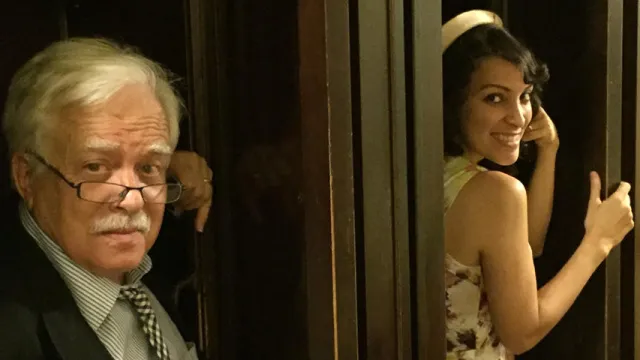
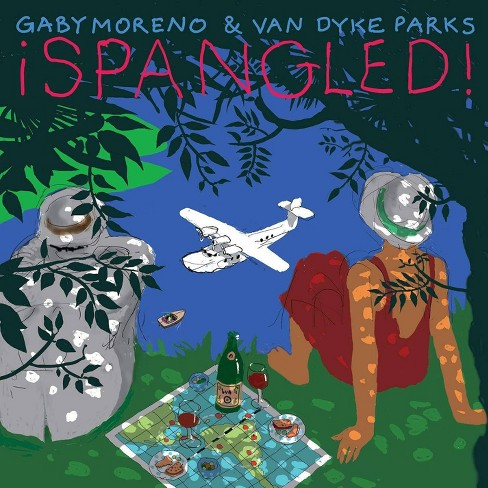
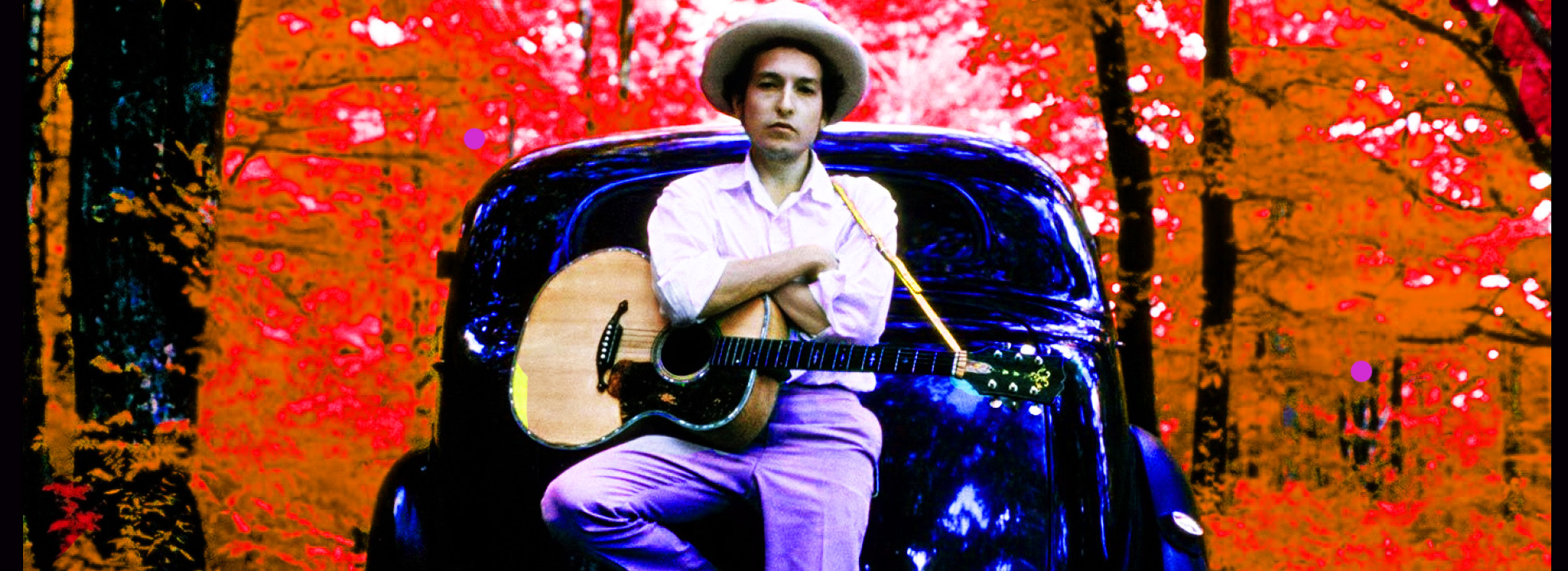
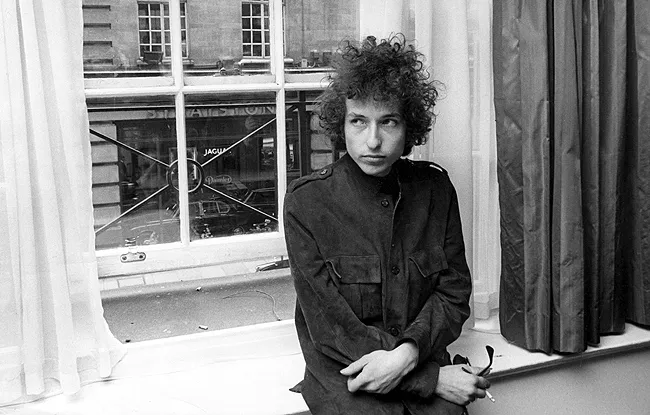
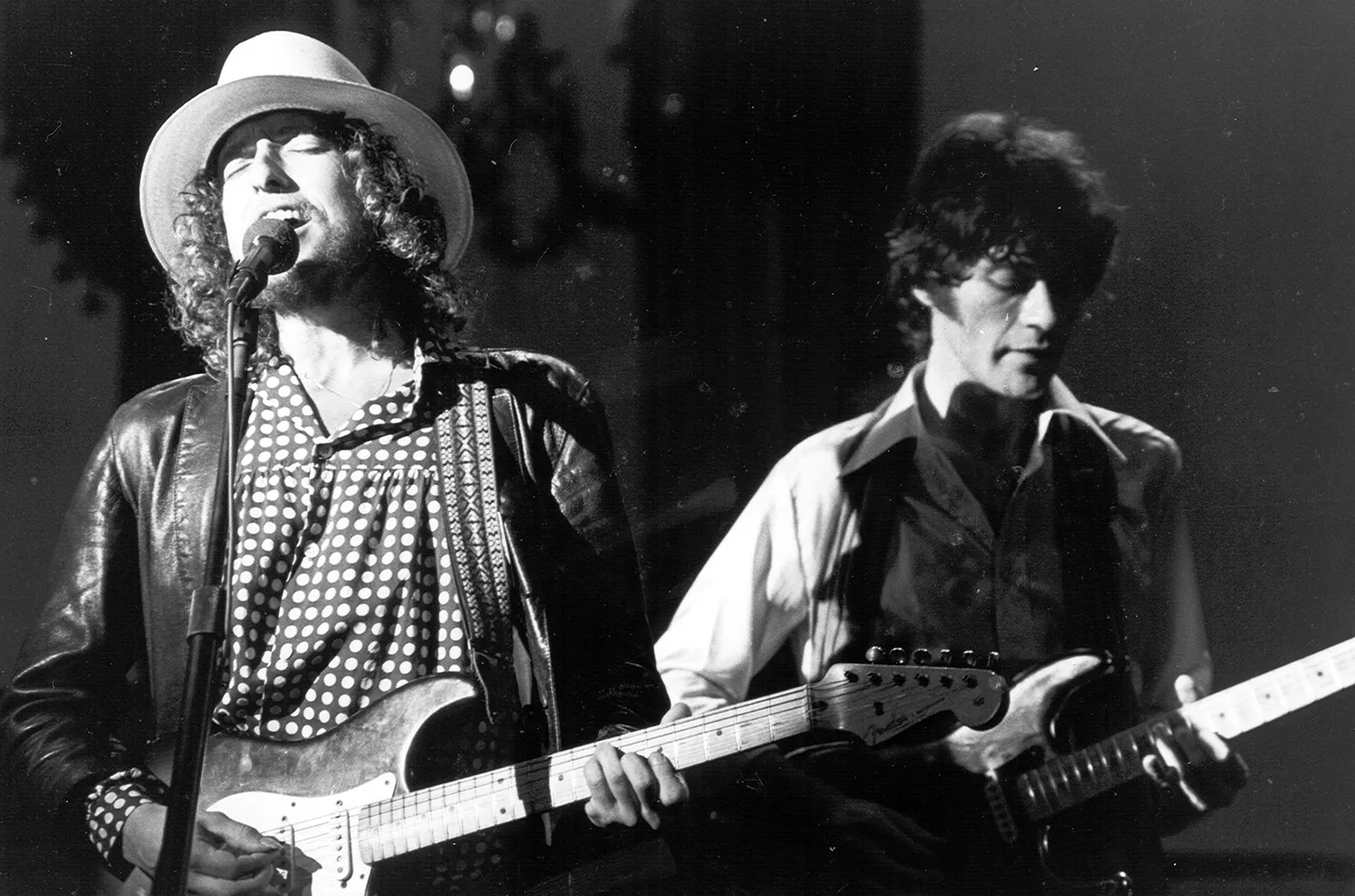
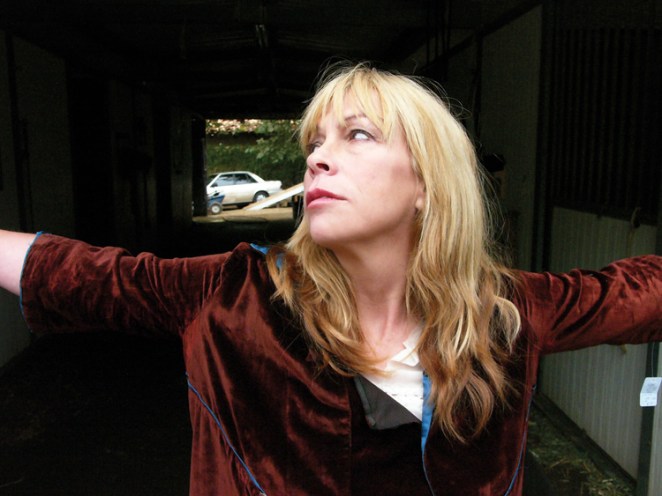



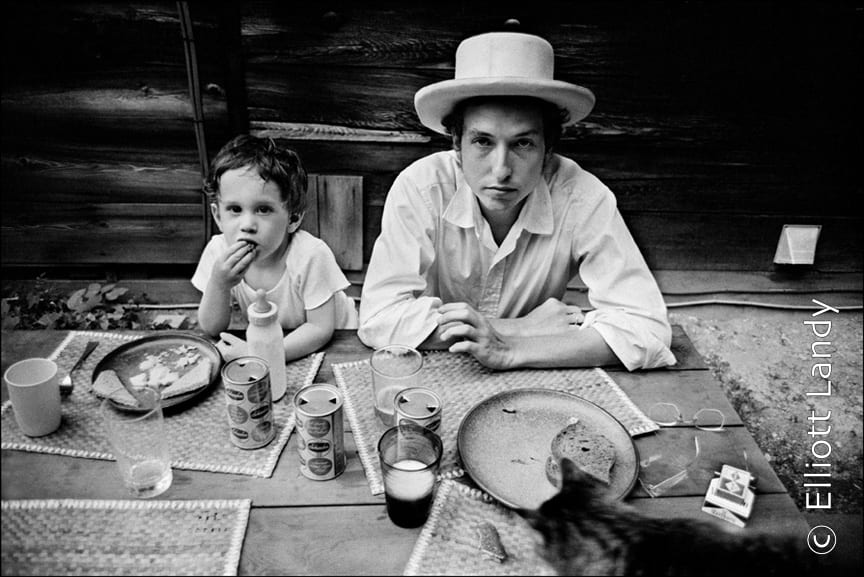


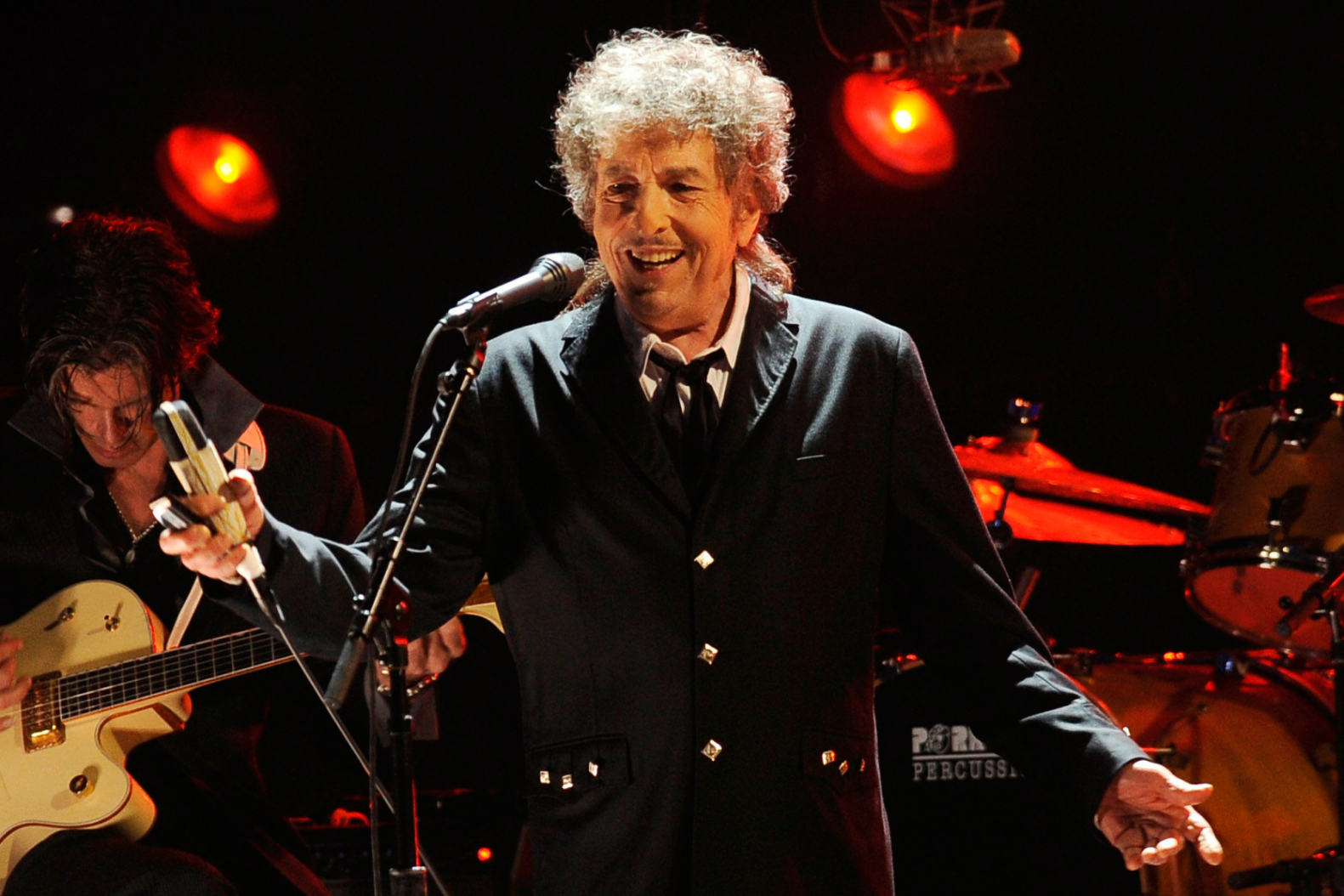
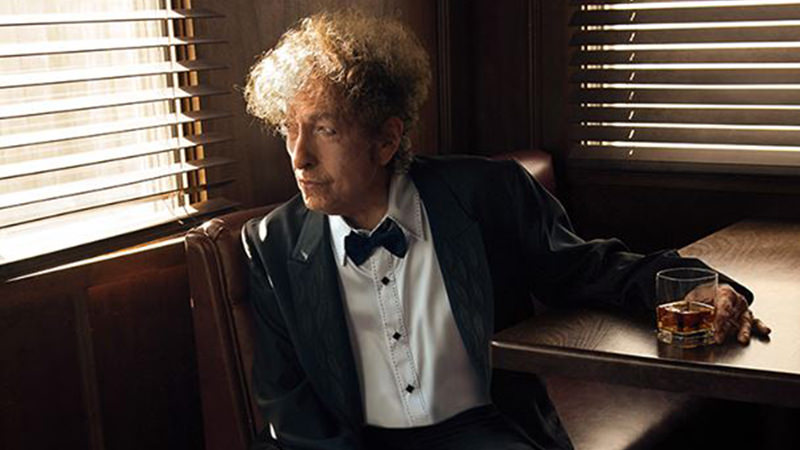
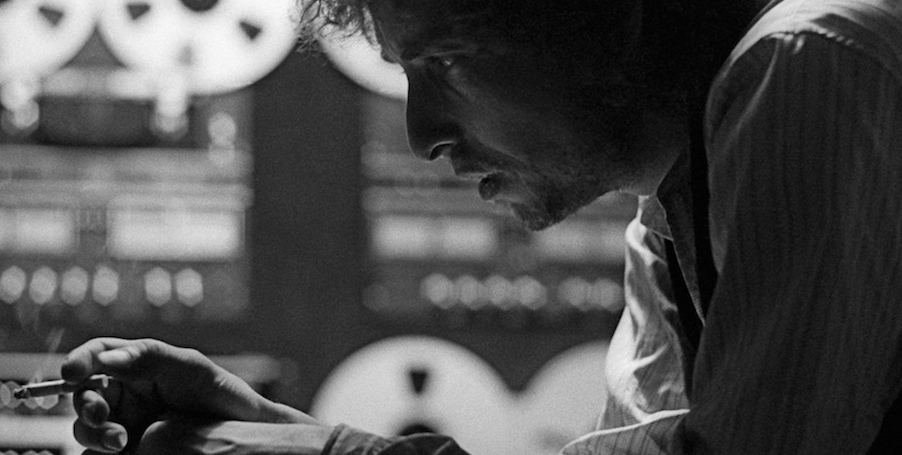
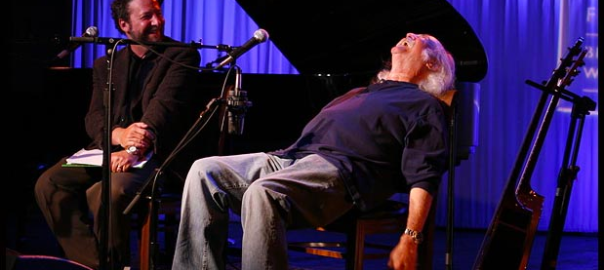


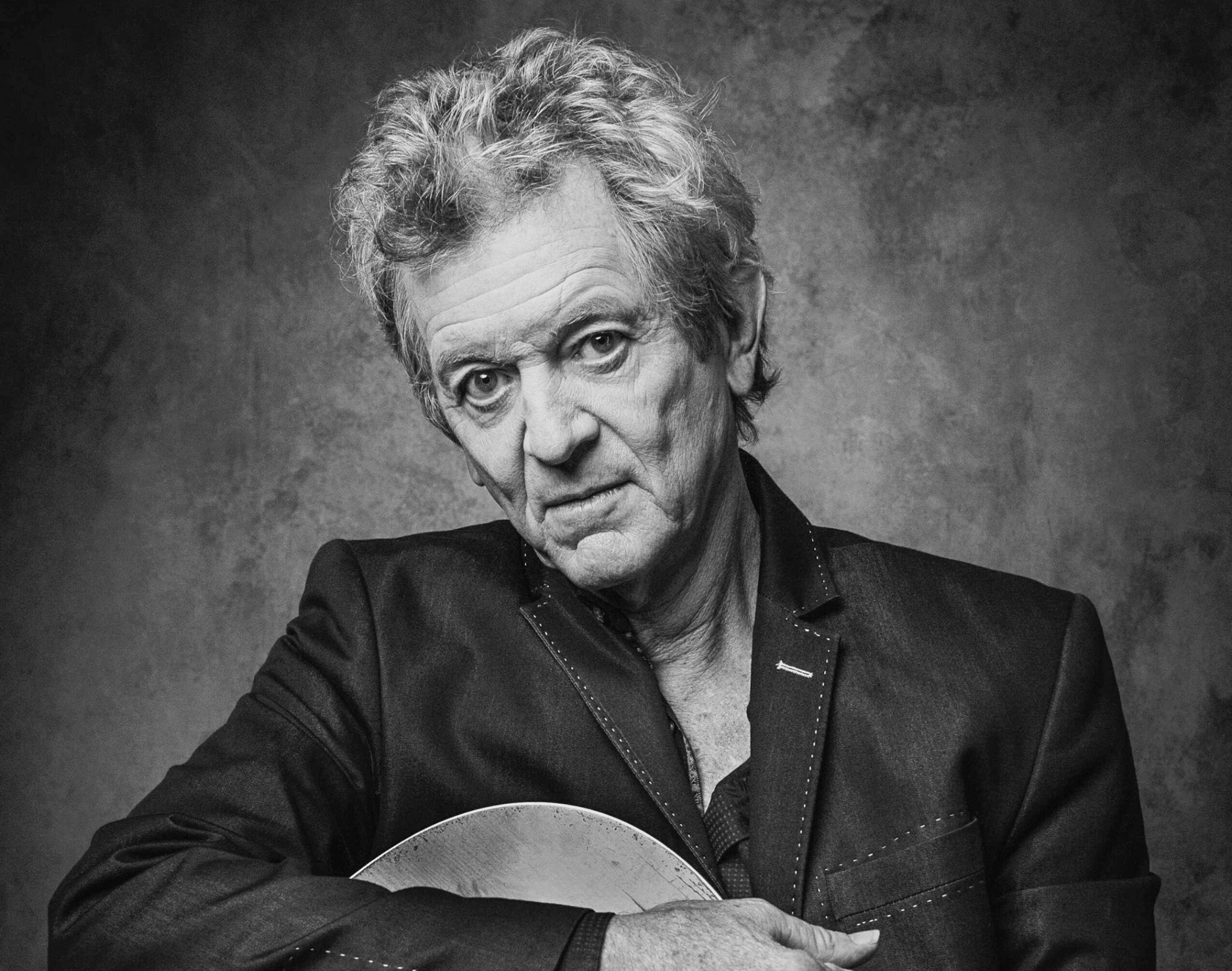
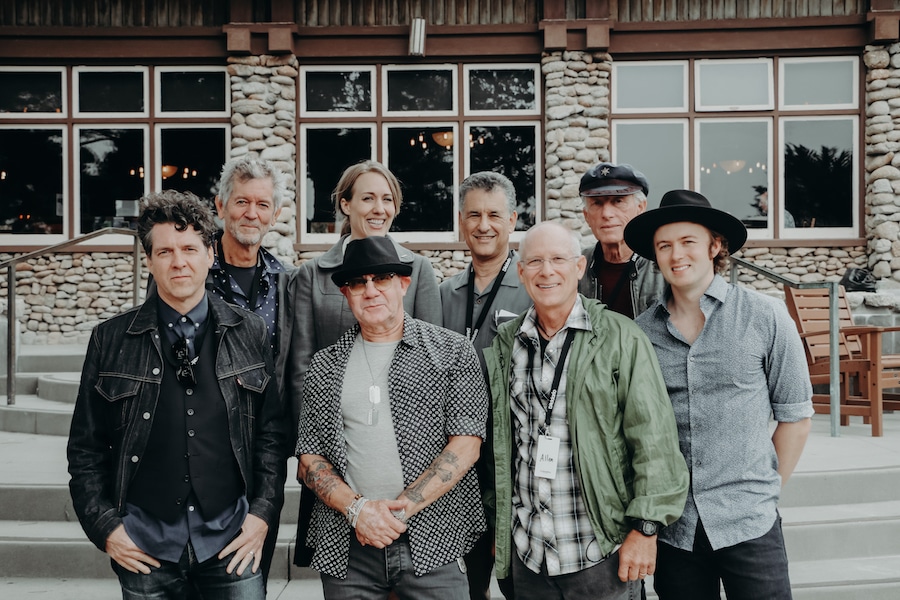
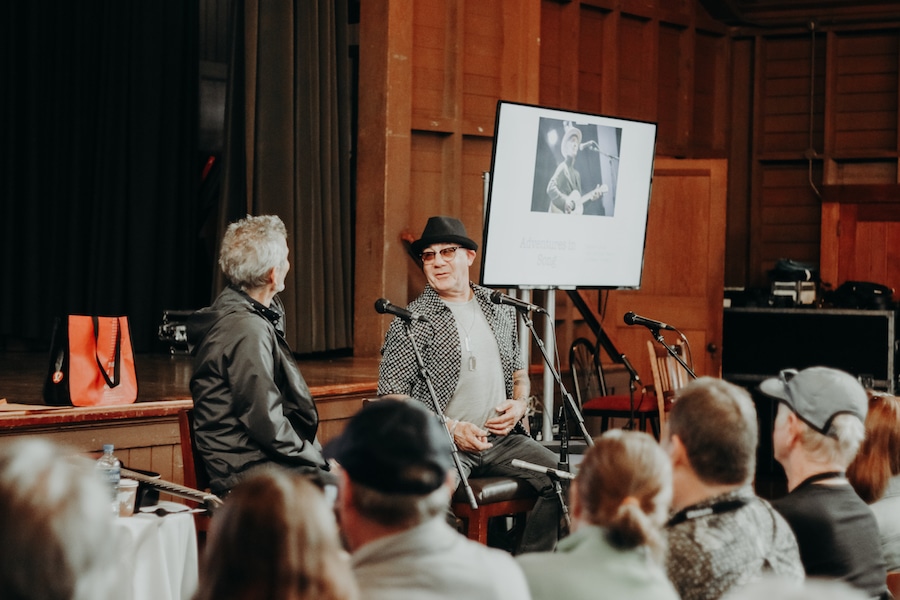


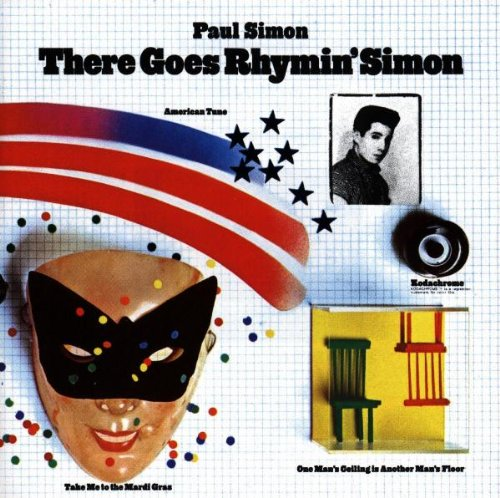





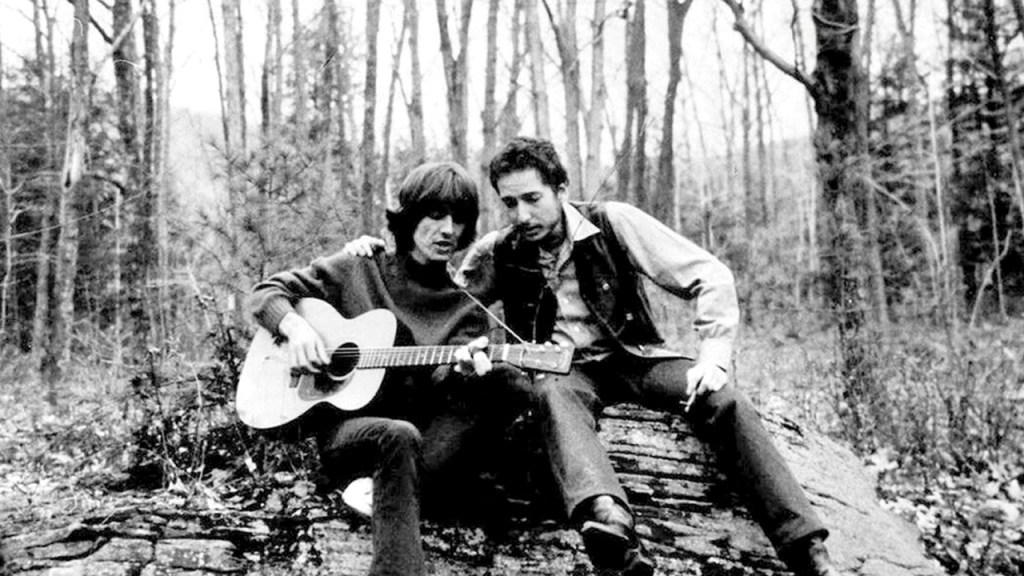
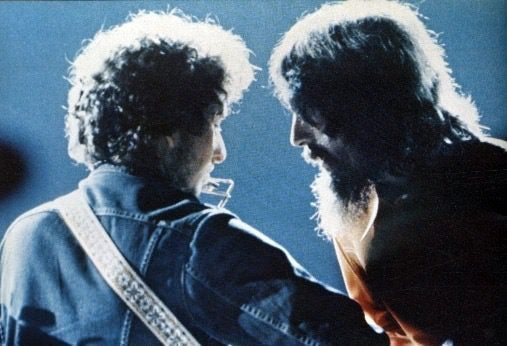

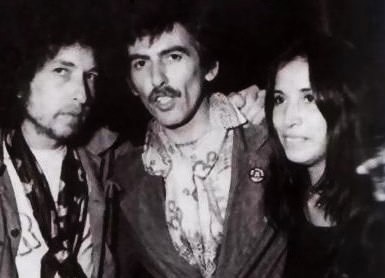
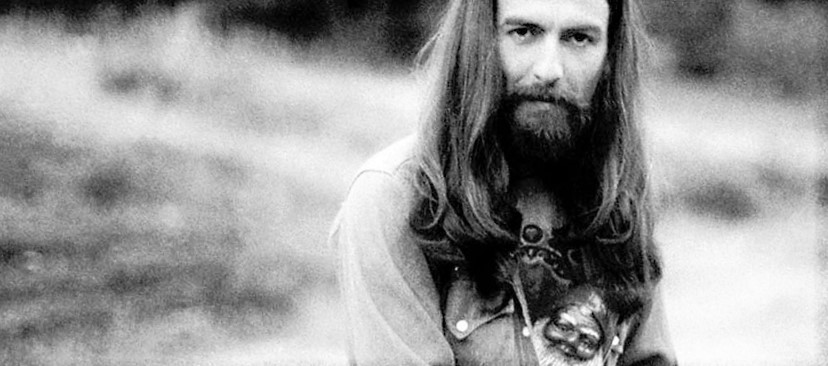

 bluerailroad